In 2026, the way we work is undergoing a major transformation — and at the center of it are AI agents and automation tools. What once required hours of manual effort can now be handled by intelligent systems that think, act, and optimize processes on their own. From managing tasks and generating content to handling customer interactions and enabling AI-powered creative workflows, these tools are becoming the foundation of modern productivity. Businesses, freelancers, and creators are all turning to AI automation tools to streamline operations, reduce workload, and scale faster than ever before.
The biggest shift isn’t just automation — it’s autonomy. Today’s AI agents don’t simply follow predefined rules; they analyze data, make decisions, and continuously improve based on performance. This evolution is what makes AI-powered automation so powerful in 2026. Instead of manually controlling every step, users can now build systems that run independently — executing tasks, responding to inputs, and optimizing outcomes in real time. Whether it’s AI agents for business, AI tools for marketing, or AI sales automation, these solutions are designed to work in the background while you focus on strategy and growth.
One of the key advantages of using AI agents and automation tools is their ability to operate 24/7 without interruption. This means you can automate repetitive processes like lead generation, email outreach, customer support, and content creation — all while maintaining consistency and quality. For example, AI workflow automation tools can connect multiple platforms, trigger actions based on user behavior, and ensure that every step of your funnel is optimized. This not only saves time but also reduces human error and increases overall efficiency.
Another important benefit is scalability. With the right AI automation tools, you can handle more work without increasing your team size or operational costs. Startups can compete with larger companies, solo creators can manage entire businesses, and teams can focus on high-impact tasks instead of routine work. Tools like no-code AI agents and automation platforms make it easier than ever to build custom workflows without technical expertise, opening the door for anyone to leverage the power of artificial intelligence.
Personalization is also a major factor driving the adoption of AI agents in 2026. Modern users expect tailored experiences, and AI makes this possible at scale. Whether it’s personalized emails, dynamic content, or smart recommendations, AI-powered tools can analyze user data and deliver relevant interactions in real time. This leads to higher engagement, better user experience, and improved conversion rates across industries.
As the ecosystem continues to evolve, the number of available tools can feel overwhelming. There are hundreds of platforms offering different features — from AI assistants and chatbots to advanced automation software and workflow builders. Some tools focus on specific tasks like content generation or outreach, while others provide all-in-one solutions that cover multiple aspects of your business. That’s why choosing the right AI agent or automation tool depends on your goals, workflow, and level of experience.
In this ultimate collection, we’ve curated the best AI agents and automation tools for 2026 — carefully selected based on their performance, usability, and real-world impact. These tools represent the future of work, where AI-driven automation replaces manual processes and enables smarter, faster decision-making. Whether you’re looking to automate your business, improve productivity, or build scalable systems that run on autopilot, this guide will help you find the right solutions.
You May Also Like:
If you’re ready to move beyond repetitive tasks and start building intelligent systems that work for you, this collection is your starting point. The future belongs to those who embrace AI automation, and 2026 is the year to take that step.
Below, you’ll discover the top AI agents…
Quick Comparison of AI Agents & Automation Tools (2026)
| Tool | Best For | Key Feature | Difficulty | Use Case |
|---|
| ChatGPT | All-in-one AI agent | Custom GPTs & automation | Easy | Content, workflows |
| Claude | Advanced reasoning | Long-context AI | Medium | Research, analysis |
| Zapier | No-code automation | App integrations | Easy | Business automation |
| Make | Visual workflows | Advanced automation builder | Medium | Complex systems |
| n8n | Self-hosted workflows | Full customization | Hard | Developers |
| Gumloop | AI agent builder | Natural language setup | Easy | Beginners |
| CrewAI | Multi-agent systems | AI collaboration | Hard | Advanced workflows |
| LangGraph | Agent orchestration | Memory + state logic | Hard | Dev / enterprise |
| Power Automate | Enterprise automation | Microsoft ecosystem | Medium | Corporate workflows |
| Vertex AI | AI development | Scalable infrastructure | Hard | Enterprise AI |
| AWS Bedrock | AI infrastructure | Multi-model support | Hard | Enterprise systems |
| Composio | AI integrations | Connect 500+ apps | Medium | Automation systems |
| Relevance AI | Business agents | Data + workflows | Medium | Ops & sales |
| Voiceflow | Chat agents | Conversational AI | Easy | Support & chat |
| UiPath | RPA automation | Enterprise workflows | Hard | Large companies |
What Are AI Agents?
AI agents are intelligent systems that can perform tasks, make decisions, and automate workflows without constant human input. They are widely used for business automation, productivity, and scaling operations.
Best overall AI agent platform
OpenAI ChatGPT has evolved into one of the most powerful AI agent platforms in 2026, offering advanced capabilities for AI automation, content generation, and workflow optimization. With features like custom GPTs, memory, tool integrations, and autonomous task execution, it enables users to build intelligent systems that can handle everything from research and writing to coding and business operations.
As one of the most widely adopted AI assistants, ChatGPT allows individuals and companies to automate repetitive tasks, generate high-quality content, and create scalable AI workflows. Its flexibility makes it ideal for creators, marketers, developers, and entrepreneurs looking to build AI-powered systems that run on autopilot.
👉 Why it stands out:
A highly versatile AI automation tool that can be transformed into a full-scale AI agent for productivity, business, and creative workflows.
Best for advanced reasoning and autonomous workflows
Claude by Anthropic is one of the most advanced AI agents for reasoning, long-context understanding, and automation. Designed for handling complex tasks, it excels in analyzing large datasets, processing long documents, and supporting advanced decision-making workflows. New innovations like Claude Managed Agents allow businesses to deploy autonomous systems with built-in memory, permissions, and execution environments.
Claude is particularly useful for building AI-powered business workflows, research automation, and enterprise-level solutions that require accuracy and contextual understanding. Its ability to operate independently for extended periods makes it a strong choice for companies adopting AI-driven automation strategies.
👉 Why it stands out:
One of the most powerful AI workflow automation tools for building intelligent, autonomous systems at scale.
Best for no-code AI automation
Zapier AI is one of the leading AI automation platforms that allows users to connect thousands of apps and create powerful workflows without coding. With the introduction of AI features like Zapier Central, users can describe workflows in natural language and automatically generate automation systems that run across multiple tools.
This makes Zapier an ideal solution for businesses looking to implement AI workflow automation quickly. From lead management and email marketing to internal operations and data syncing, Zapier helps automate repetitive processes and improve efficiency at scale. It’s widely used by startups, marketers, and teams that want to build AI-powered automation systems without technical complexity.
👉 Why it stands out:
The best entry-level platform for building no-code AI automation workflows across thousands of apps.
Best for visual workflow automation
Make is a powerful platform for building advanced AI workflow automation systems using a visual interface. It allows users to design complex automation scenarios with multiple steps, conditions, and integrations — making it ideal for businesses that need flexibility and control over their processes.
With support for hundreds of integrations and real-time triggers, Make enables users to connect AI models like OpenAI and Claude with tools like CRMs, databases, and marketing platforms. This makes it one of the most scalable AI automation tools for handling complex workflows across multiple systems.
👉 Why it stands out:
Perfect for creating advanced, scalable AI automation workflows with full visual control.
Best for self-hosted AI automation
n8n is a powerful open-source platform designed for AI automation and workflow orchestration, offering full control over data, integrations, and execution. Unlike cloud-only tools, n8n can be self-hosted, making it ideal for businesses that prioritize privacy and customization.
It supports integration with major AI models and allows users to create highly customizable workflows, from data processing to lead generation and automation pipelines. This flexibility makes it a popular choice for developers and advanced users building custom AI agents and automation systems.
👉 Why it stands out:
Best for teams needing full control, scalability, and custom AI workflow automation.
Best for building AI agents with natural language
Gumloop is an emerging platform focused on simplifying the creation of AI agents and automation workflows through natural language instructions. Instead of building complex systems manually, users can describe tasks and workflows, and the platform generates the automation logic automatically.
It’s particularly useful for small businesses and creators who want to implement AI automation tools quickly without technical skills. By combining automation with AI reasoning, Gumloop allows users to create efficient systems for outreach, research, and operations.
👉 Why it stands out:
One of the easiest ways to build AI agents without coding, making automation accessible to everyone.
Best for multi-agent systems
CrewAI is a framework designed for building multi-agent AI systems, where multiple AI agents collaborate to complete complex tasks. Each agent can have its own role, goals, and responsibilities, creating a system that mimics real-world team collaboration.
This makes CrewAI ideal for businesses looking to automate complex workflows such as content production, research, and operations. Multi-agent systems are becoming a key trend in AI automation, enabling more sophisticated and scalable processes.
👉 Why it stands out:
Enables advanced multi-agent automation systems for complex workflows.
Best for advanced AI agent orchestration
LangGraph is an advanced framework for building structured AI agent workflows with memory, state management, and control logic. It’s designed for developers who need reliable, production-ready systems that go beyond simple automation.
By enabling persistent workflows and complex decision-making processes, LangGraph helps build scalable AI-driven applications and automation pipelines. It’s often used in enterprise environments where reliability and control are critical.
👉 Why it stands out:
Best for building advanced, production-level AI agent systems.
Best for enterprise automation
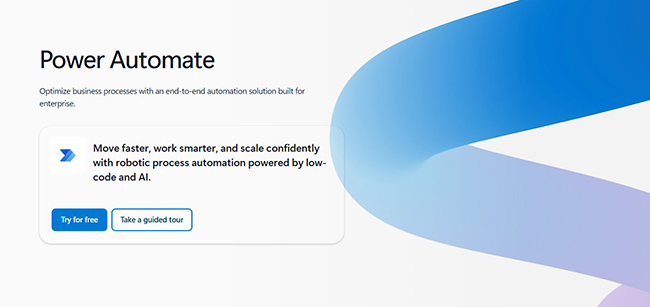
Microsoft Power Automate combined with Copilot brings powerful AI automation tools into the Microsoft ecosystem. It allows businesses to automate workflows across Microsoft 365, CRM systems, and enterprise applications using AI-powered assistants.
With built-in integrations and AI-driven suggestions, teams can automate repetitive tasks, improve collaboration, and streamline operations. This makes it a strong choice for organizations looking to implement enterprise-level AI automation.
👉 Why it stands out:
Seamless integration with Microsoft tools for enterprise AI workflow automation.
Best for enterprise AI agent development
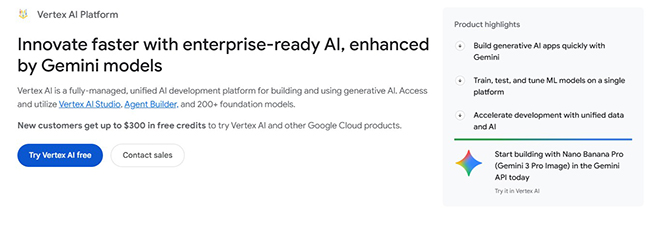
Google Vertex AI provides a comprehensive platform for building and deploying AI agents at scale. It offers tools for machine learning, data processing, and automation, making it suitable for large-scale applications.
Businesses can use Vertex AI to create advanced AI-powered systems, automate workflows, and deploy intelligent agents across cloud environments.
👉 Why it stands out:
Enterprise-grade infrastructure for building scalable AI agents and automation systems.
Best for scalable AI infrastructure
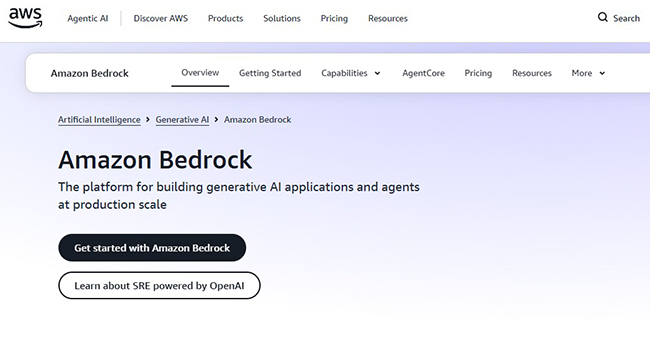
AWS Bedrock enables developers and companies to build AI agents and automation tools using multiple foundation models. It provides a secure and scalable infrastructure for deploying AI systems across cloud environments.
This platform is widely used for building enterprise-level AI automation workflows that require reliability, security, and scalability.
👉 Why it stands out:
Highly scalable solution for enterprise AI automation and infrastructure.
Best for connecting AI agents to real-world apps
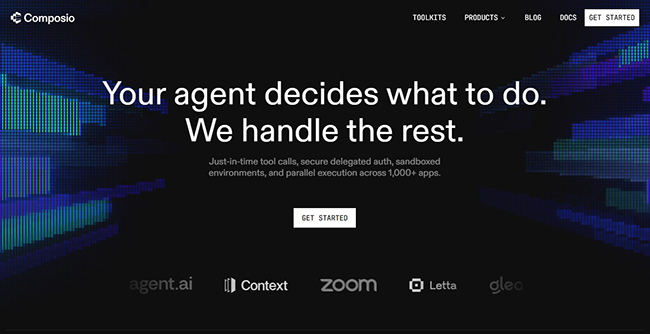
Composio is a powerful integration platform that connects AI agents to real-world applications like Slack, Gmail, and GitHub. This allows AI systems to take real actions, not just generate responses.
By enabling automation across multiple tools, Composio transforms AI agents into fully functional automation systems that can execute tasks across business workflows.
👉 Why it stands out:
Turns AI agents into real-world automation systems with app integrations.
Best for building business AI agents
Relevance AI is designed for creating custom AI agents for business workflows, including sales, operations, and customer support. It provides tools for data processing, automation, and workflow design.
Companies can use it to build scalable AI automation systems that improve efficiency and decision-making.
👉 Why it stands out:
Focused on building AI agents for business automation and operations.
Best for conversational AI agents
Voiceflow is a platform for designing and deploying AI chatbots and voice agents. It allows teams to create conversational workflows for customer support, sales, and engagement.
With a visual builder and AI integrations, Voiceflow makes it easy to create scalable AI-powered conversational systems.
👉 Why it stands out:
Best for building AI chat agents and conversational automation.
Best for enterprise robotic process automation (RPA)
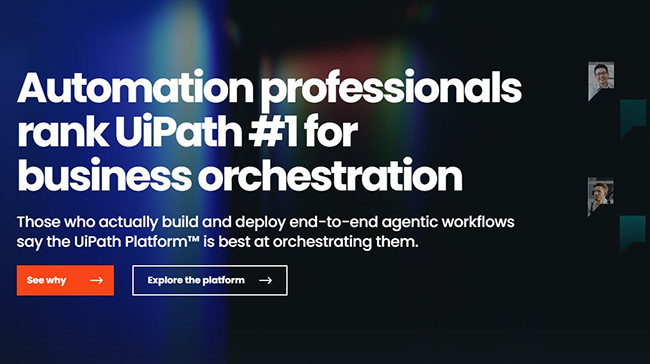
UiPath is a leading platform for AI-driven robotic process automation (RPA), enabling businesses to automate complex workflows across systems. It combines traditional automation with AI to handle tasks like data processing, reporting, and operations.
This makes it a key tool for enterprises implementing AI automation at scale across departments.
👉 Why it stands out:
Industry leader in enterprise AI automation and RPA solutions.
🚀 How to Use AI Agents in Your Workflow
AI agents are most powerful when integrated into your daily workflow. Here’s how you can start using them effectively:
- Automate repetitive tasks and reduce manual work
- Build AI workflows that run on autopilot
- Connect multiple tools using automation platforms
- Use AI agents to scale your business and productivity
🔥 Final Thoughts
AI agents in 2026 are no longer just assistants — they are autonomous systems that can run entire workflows, businesses, and operations.
- Beginners → Zapier, Gumloop
- Creators → ChatGPT, Claude
- Businesses → Relevance AI, Composio
- Enterprise → AWS, Google, Microsoft
👉 The real power comes from combining tools into a complete AI automation system — not using just one platform.
Related
Discover more from DesignRise
Subscribe to get the latest posts sent to your email.