Fashion ecommerce has always had one major limitation: shoppers cannot try the product before buying it.
Product photos, size charts, model images, videos, and customer reviews all help. But they still leave one important question unanswered: how will this item look on me?
That question creates buying friction. A customer may like the product, understand the size guide, and still hesitate because they cannot imagine the final result on their own body, with their own proportions, style, and visual expectations.
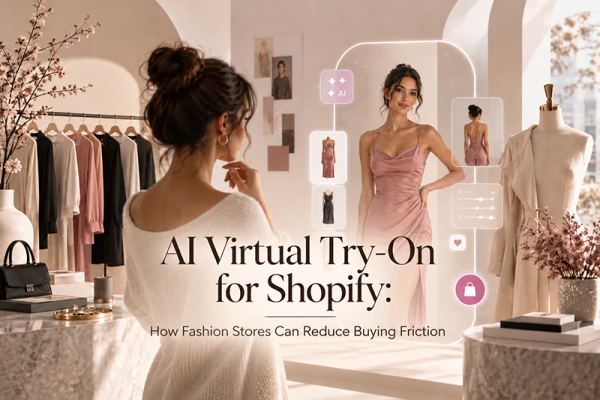
This is where AI virtual try-on is becoming more relevant for Shopify fashion stores. Instead of treating product pages as static catalogs, virtual try-on adds a more interactive layer to the shopping experience. It allows shoppers to move from simply looking at clothing to visualizing themselves wearing it.
For fashion brands, this shift is not just about novelty. It is about confidence, conversion, and the growing expectation that online shopping should feel more personal.
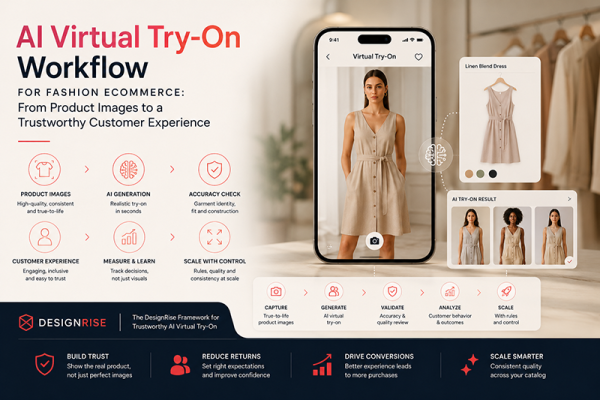
For a deeper implementation framework, read our guide to building an AI virtual try-on workflow for fashion ecommerce, where we explain how brands can move from tool selection to a more reliable ecommerce process.
Why Fashion Ecommerce Still Has a Confidence Problem
Online fashion shopping is visual, emotional, and highly personal. A customer is rarely buying only fabric, color, or size. They are buying a version of themselves: how they want to look, how they want to feel, and how they imagine the product fitting into their lifestyle.
Traditional product pages often struggle to support that decision.
A model photo may show the garment beautifully, but the shopper may have a different body type. A flat product image may show details clearly, but it does not communicate fit or presence. A size chart may provide measurements, but it does not always reduce doubt. Even strong product photography can leave a gap between what the brand shows and what the shopper needs to imagine.
That gap matters because hesitation is one of the biggest enemies of ecommerce performance. When shoppers are unsure, they delay the purchase, abandon the cart, search for alternatives, or buy multiple sizes with the intention of returning what does not work.
AI virtual try-on tools are designed to reduce this visual uncertainty.
What AI Virtual Try-On Adds to the Product Page
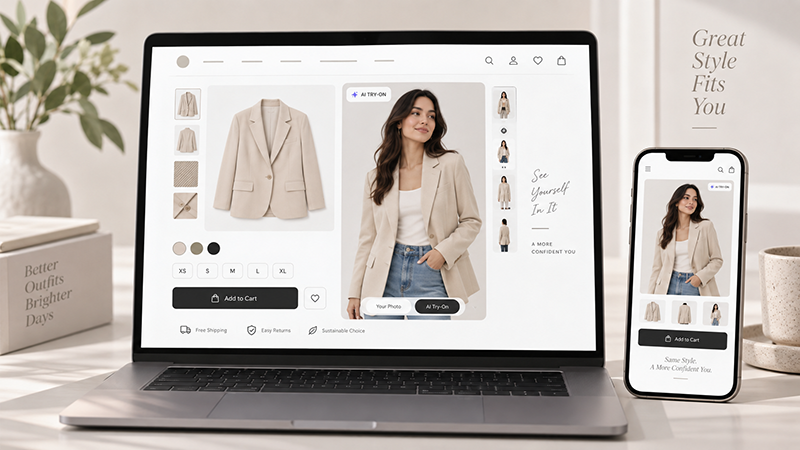
AI virtual try-on allows shoppers to see a more personalized version of the product experience. Instead of only viewing clothing on a model or mannequin, the customer can use their own photo or a personalized visual input to understand how an item may look on them.
This changes the role of the product page.
It becomes less like a static catalog and more like a guided decision environment. The shopper can compare, imagine, and evaluate the product with more context. For fashion ecommerce, this can be especially valuable because the decision is often visual before it is rational.
When implemented well, virtual try-on can support several parts of the customer journey:
Discovery: shoppers can explore products in a more engaging way.
Evaluation: they can better understand whether the style feels right for them.
Confidence: they may feel more comfortable moving from interest to purchase.
Personalization: the shopping experience feels less generic and more individual.
The goal is not to replace strong photography, accurate sizing, or clear product descriptions. The goal is to add another layer of visual decision support.
AI virtual try-on adds a more personalized decision layer to fashion ecommerce product pages.
Why Shopify Stores Are a Natural Fit for AI Try-On
Shopify has become a major platform for independent fashion brands, boutiques, direct-to-consumer labels, and growing ecommerce businesses. Many of these brands do not have the budget or technical team to build custom virtual fitting-room technology from scratch.
That makes Shopify apps and no-code tools especially important.
For smaller teams, the practical question is not whether AI virtual try-on is interesting. The real question is whether it can be added to a store without creating a complicated development project.
A Shopify-focused virtual try-on solution can be useful because it fits into the existing ecommerce workflow. The store already has products, images, collections, product pages, and checkout. A virtual try-on layer can become part of that environment rather than a separate experience that shoppers must leave the store to use.
This is also why AI try-on is especially relevant for fashion brands that want to improve the buying experience without rebuilding their entire website.
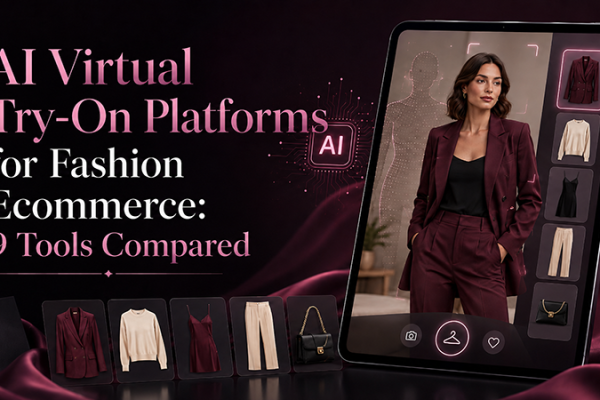
If you are still comparing platforms, DesignRise also has a separate guide to the best AI virtual try-on tools for fashion ecommerce, including different options for Shopify stores, enterprise retail, AR accessories, and product visualization workflows.
A Shopify-Focused Example: Torziva
One example of this category is Torziva, an AI virtual try-on for Shopify built for fashion ecommerce brands that want to let shoppers visualize outfits on their own photo before buying.
The appeal of a tool like Torziva is its specific focus. It is not a general AI image generator or a broad creative platform. It is positioned around a direct ecommerce problem: helping online fashion shoppers see how clothing may look on them inside the shopping experience.
For Shopify merchants, this kind of tool can be useful when the brand wants to make product pages more interactive, reduce visual uncertainty, and give shoppers another reason to stay engaged before making a purchase decision.
It may be especially relevant for:
online clothing boutiques;
direct-to-consumer fashion brands;
Shopify stores selling apparel collections;
brands testing AI-powered product experiences;
ecommerce teams looking for a more personalized shopping flow.
As with any AI-powered shopping feature, the value depends on how naturally it fits into the customer journey. The best implementation is not one that distracts from the product. It is one that helps the shopper make a more confident decision.
Where AI Virtual Try-On Fits in the Ecommerce Workflow
AI virtual try-on should not be treated as a decorative feature added only because AI is popular. For fashion ecommerce, it works best when it supports a clear business and customer experience goal.
Before adding virtual try-on to a Shopify store, brands should think about where the hesitation happens.
For example, a store may receive strong traffic but low conversion on product pages. Another brand may have frequent questions about fit, shape, or styling. A boutique may notice that customers love browsing but hesitate before checkout. In each case, virtual try-on can be tested as a way to reduce uncertainty at the decision point.
A practical workflow might look like this:
Choose the right product category. Start with items where visual confidence matters most.
Use strong product images. AI try-on works best when the product visuals are clear and consistent.
Add the try-on option near the purchase decision. The feature should be easy to find on the product page.
Keep product information clear. Virtual try-on should complement sizing, materials, fit notes, and care details.
Measure behavior. Track whether shoppers interact with the feature, stay longer, or move closer to purchase.
This workflow keeps the focus on the customer experience rather than the technology itself.
What AI Try-On Can and Cannot Solve
AI virtual try-on can help shoppers visualize clothing, but it should not be presented as a perfect replacement for real fitting.
Fashion decisions are influenced by many factors: fabric, stretch, cut, body movement, lighting, comfort, and personal taste. A visual try-on can support the decision, but it cannot fully communicate every physical detail of the garment.
That is why brands should use AI try-on responsibly. The experience should be positioned as a visualization tool, not as an absolute guarantee of fit. Clear product descriptions, size guidance, return policies, and real customer photos still matter.
The strongest ecommerce experience combines multiple trust signals:
Product imagery is still part of that trust layer. Our article on how AI is changing ecommerce photography explains why generated visuals need to support buyer confidence without making products look misleading.
high-quality product photography;
accurate size and fit information;
clear shipping and return policies;
customer reviews or user-generated content;
AI-powered visualization where it adds real value.
AI virtual try-on is most effective when it becomes part of this larger trust system.
Why This Matters for Smaller Fashion Brands
Large fashion retailers have spent years investing in personalization, recommendation systems, advanced product imagery, and immersive shopping experiences. Smaller brands often have to compete with fewer resources.
AI tools are beginning to narrow that gap.
A small Shopify store may not be able to build a custom virtual fitting room, but it can experiment with AI-powered try-on technology through more accessible tools. This gives independent fashion brands a way to test interactive shopping features without needing the infrastructure of a large retailer.
For boutiques and emerging brands, this can be strategically important. A more confident shopper is not only more likely to buy. They are also more likely to remember the experience, share the product, and return to the store later.
In that sense, AI virtual try-on is not only a conversion feature. It is also part of brand experience.
How to Evaluate an AI Virtual Try-On Tool
Before choosing an AI virtual try-on tool for Shopify, brands should look beyond the feature list. The best tool is the one that fits the store’s products, customers, and workflow.
Here are a few questions worth asking:
Does the tool work naturally with Shopify product pages?
Is the try-on experience simple enough for customers to understand quickly?
Does it support the type of clothing the store sells?
How much setup is required?
Does the visual result feel realistic enough to support confidence?
Can the brand test the feature on selected products first?
Does it improve the product experience without slowing down the buying journey?
These questions help keep the decision practical. A virtual try-on tool should not only look impressive in a demo. It should help real shoppers make better decisions on real product pages.
The Future of AI Try-On in Fashion Ecommerce
AI virtual try-on is part of a larger movement toward more personalized ecommerce experiences.
Shoppers increasingly expect online stores to understand context: their preferences, their style, their uncertainty, and their need for visual confidence. Static product pages are not disappearing, but they are becoming only one part of the decision journey.
For Shopify fashion stores, the next stage of ecommerce may be less about adding more product images and more about helping each shopper see the product in relation to themselves.
This is where AI-powered visualization can become useful. It gives fashion brands a way to make online shopping feel more personal, more interactive, and more supportive of real purchase decisions.
The most successful brands will not use AI try-on simply because it is new. They will use it because it solves a specific problem: helping customers move from uncertainty to confidence.
Final Thoughts
AI virtual try-on is not a magic solution for every fashion ecommerce challenge. It will not replace good products, strong branding, reliable sizing, or thoughtful customer service.
But for Shopify fashion stores, it can become a valuable layer in the product experience. When shoppers can better visualize how clothing may look on them, the buying journey becomes more personal and less uncertain.
For brands, that matters.
The future of fashion ecommerce will likely belong to stores that combine strong creative direction with practical AI tools — not to replace human taste, but to support better decisions at the exact moment shoppers need them most.