
User-generated-content advertising used to require finding creators, shipping products, negotiating usage rights, waiting for footage, and then producing multiple edits for different platforms.
In 2026, much of that workflow can be automated.
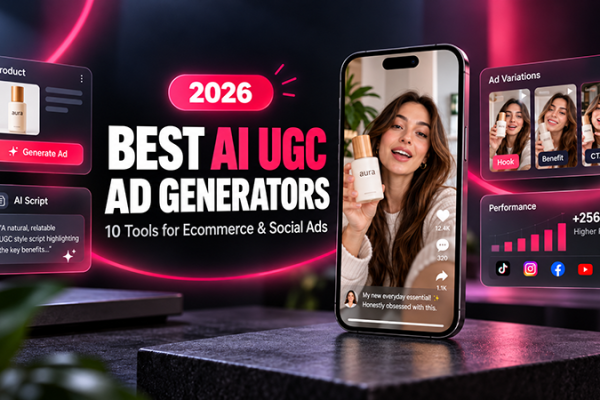
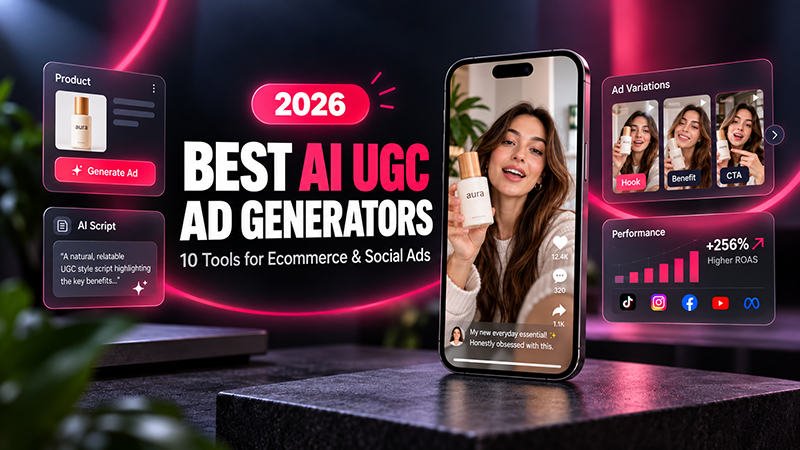
AI UGC ad generators can now take a product URL, image, or short brief and turn it into a creator-style video complete with an AI actor, script, voiceover, captions, product shots, and social-ready formatting. More advanced platforms can also generate dozens of hooks, switch actors, localize campaigns, recreate the structure of existing ads, and produce variations for creative testing.
This is no longer a fringe workflow. According to IAB, nearly two-thirds of digital video buyers were already using generative AI for creative in 2026, while the share of advertising assets incorporating generative AI continues to grow.
The shift is particularly important for ecommerce brands, where creative fatigue can make constant production almost as important as media buying itself.
But not every AI video tool is good at UGC.
Some platforms create polished presenters that work well for explainers but look too corporate for TikTok. Others specialize in performance advertising, product-in-hand scenes, fast hook testing, or turning ecommerce product pages directly into short-form ads. If you also work with generative video beyond UGC, our AI Video Prompt Guide explains how to control motion, camera behavior, and lighting more precisely.
In this guide, we compare 10 of the best AI UGC ad generators in 2026, focusing specifically on ecommerce, paid social, TikTok, Instagram Reels, and scalable creative production.
Important: AI UGC imitates the visual language of user-generated content, but it is still synthetic content. Brands should avoid presenting an AI-generated actor as a genuine customer or inventing testimonials and personal experiences that never happened.
Best AI UGC Ad Generators in 2026: Quick Comparison
| Tool | Best For | Standout Feature | Starting Price* |
|---|---|---|---|
| Creatify | Performance marketing | Product URL to multiple ad variations | $39/month |
| Arcads | High-volume creative testing | Large AI actor library and ad workflows | Varies |
| AdCreative.ai | Ads and creative intelligence | UGC generation inside a broader ad platform | $39/month |
| MakeUGC | Dedicated AI UGC production | Large AI creator library and batch generation | $59/month |
| Tagshop AI | Ecommerce brands | Product URL to complete UGC ad | $29/month |
| Pippit | Product-led social content | URL, product assets and AI editing | Free plan available |
| HeyGen | Multilingual avatar ads | Advanced avatars and localization | $29/month |
| invideo AI | End-to-end AI video production | Agentic multi-step video creation | $20/month annually |
| Predis.ai | Social media teams | Creation, ads and publishing in one workflow | $24/month annually |
| Captions / Mirage | Expressive AI actors | Generative acting and UGC-style ad creation | Varies |
* Pricing was checked in September 2026 and may change. Some platforms use credits, annual discounts, promotional pricing, or custom plans.
What Is an AI UGC Ad Generator?
An AI UGC ad generator creates videos designed to resemble creator-made social content without requiring someone to film every variation manually.
Unlike a traditional text-to-video generator, a strong AI UGC platform usually understands the structure of an advertisement.
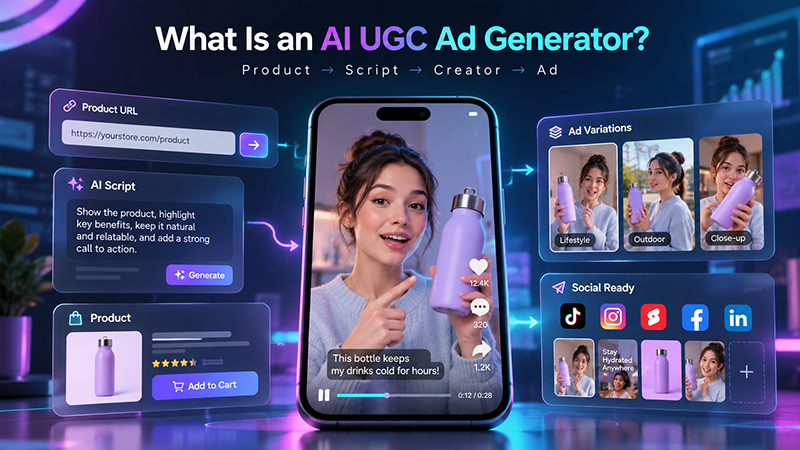
You might give it a Shopify product URL. The system can extract the product name, features, images, and positioning, write a hook, choose or generate an actor, add product visuals, create a voiceover, build captions, and export a vertical video.
The important difference is workflow.
A general AI video generator might give you an impressive short clip.
An AI UGC advertising platform should help you move from:
Product → Angle → Hook → Script → Creator → Video → Variation → Test
That distinction matters when a brand needs 20 new ad concepts rather than one beautiful video.
1. Creatify
Best for: Performance marketers producing ecommerce ads at scale
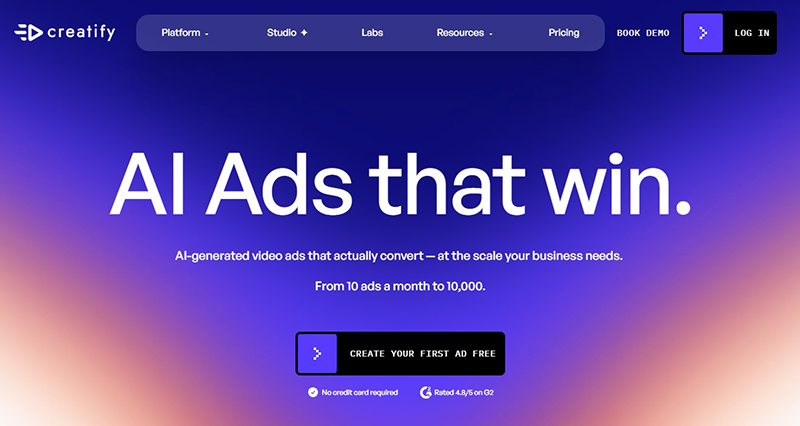
Creatify is one of the most complete platforms in this category because it is built around advertising rather than generic AI video creation.
Instead of starting from a blank editing timeline, marketers can paste a product URL and use Creatify to develop scripts, AI actors, hooks, and complete advertising concepts.
The platform offers a large library of AI actors, custom avatars, multilingual generation, product-focused workflows, and tools designed around paid social creative.
That makes Creatify particularly interesting for teams that think in terms of creative testing.
Instead of asking, “Can AI make this video?”, the workflow becomes: “How many meaningful versions of this concept can we test?”
A skincare company, for example, could start from one product page and generate different ads around ingredients, convenience, problem-solving, demonstrations, or product benefits. The actor, opening line, CTA, and creative angle can then change without organizing multiple separate shoots.
Creatify has also expanded beyond basic avatar generation with tools for competitor ad research, ad cloning, brand workspaces, collaboration, and creative automation.
Pricing: Creatify plans currently start at around $39 per month, with more advanced plans offering larger credit allowances and additional advertising features.
Why choose Creatify: It is particularly well suited to ecommerce companies and performance marketers who need a repeatable product-to-ad workflow rather than occasional AI videos.
2. Arcads
Best for: AI actors, rapid ad variation and high-volume testing
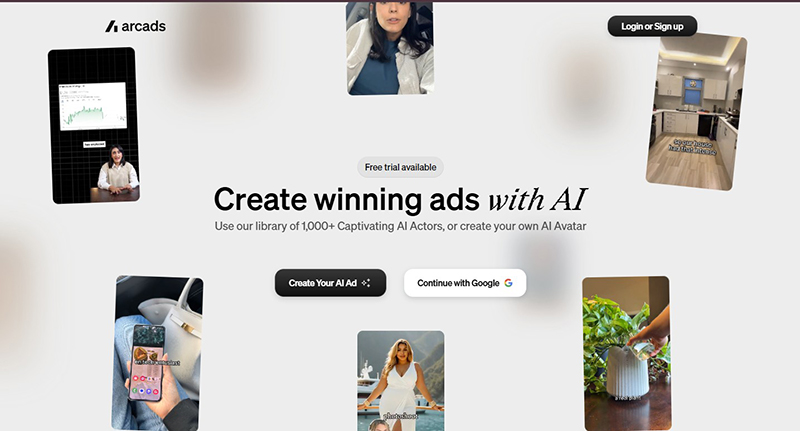
Arcads has become one of the most recognizable dedicated AI advertising platforms.
Its biggest strength is the actor layer. The platform provides access to a large library of AI actors, custom AI avatars, multilingual campaigns, and advertising workflows designed specifically for creator-style content.
Brands can use AI actors to promote products, explain apps, deliver hooks, present offers, or create multiple variations of the same ad concept.
This is particularly useful for DTC companies, mobile apps, agencies, and performance marketing teams that need to test many versions of an idea.
Arcads is also evolving beyond straightforward avatar videos into a broader AI creative production environment.
Its newer workflows combine AI actors, generative video, scripts, scenes, subtitles, creative concepts, and reusable advertising processes.
This reflects one of the biggest changes happening in AI advertising in 2026.
The competitive advantage is increasingly not simply, “Who has the most realistic avatar?”
It is becoming:
Which platform can understand the brand, generate relevant concepts, and produce the next useful batch of ads with less manual work?
Why choose Arcads: It is particularly compelling for TikTok, Meta, DTC brands, and advertisers producing large volumes of creator-style video.
3. AdCreative.ai
Best for: Brands combining AI UGC with broader advertising production
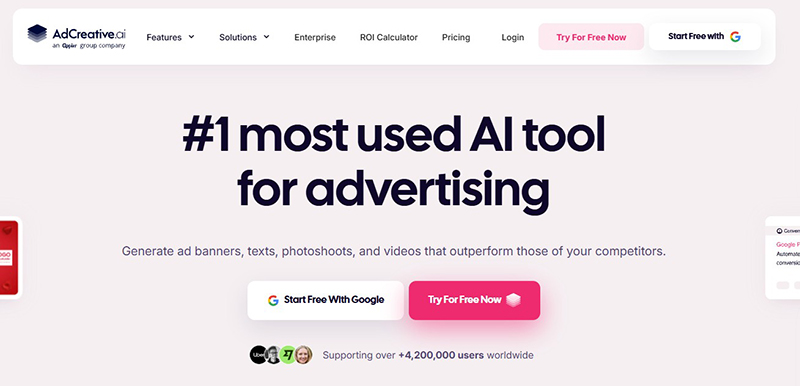
AdCreative.ai is broader than most tools in this list.
The platform focuses on advertising creatives, product photography, creative intelligence, and performance-oriented marketing assets. Its AI UGC capabilities extend that ecosystem into creator-style video. For brands building the still-image side of the same workflow, see our comparison of the best AI tools for product photography in 2026.
Users can upload product assets, choose AI avatars, add scripts, and generate videos designed for paid advertising, ecommerce pages, TikTok, Instagram Reels, and other social channels.
The biggest advantage is consolidation.
If your team already needs static advertising creatives, product images, competitor research, and AI-generated campaign assets, adding UGC-style videos inside the same ecosystem can be more practical than subscribing to a completely separate platform.
For example, one product launch might require:
- Meta image ads
- Product visuals
- Vertical AI UGC videos
- Multiple copy variations
- Creative testing assets
AdCreative.ai is designed to cover several of those needs inside one platform.
Pricing: Plans currently begin at approximately $39 per month, with higher tiers offering more credits, users, brands, and creative capacity.
Why choose AdCreative.ai: It is a good option if AI UGC is only one part of a larger advertising production workflow.
4. MakeUGC
Best for: Teams that specifically want an AI UGC production engine
MakeUGC is built specifically around AI creator advertising.
It is not trying to be a general graphic design platform or corporate video editor.
Its workflow focuses on producing creator-style ads quickly using a large selection of AI creators, multilingual voices, script generation, batch production, and product-focused capabilities.
That specialization becomes valuable when creative volume matters.
Imagine an ecommerce company has already found a strong offer but still needs to discover the strongest way to communicate it.
The marketing team might want to test:
- 5 different AI creators
- 4 opening hooks
- 3 calls to action
That creates 60 potential combinations from a single product.
Traditional creator production makes this type of experimentation expensive very quickly. AI UGC dramatically changes the economics because the same creative concept can be recombined instead of completely reshot.
Pricing: MakeUGC plans currently start around $59 per month, with higher tiers providing more credits, batch production, and advanced features.
Why choose MakeUGC: It makes the most sense for marketers who see AI UGC as an ongoing advertising process rather than a one-time experiment.
5. Tagshop AI
Best for: Ecommerce brands that want product URL-to-UGC automation
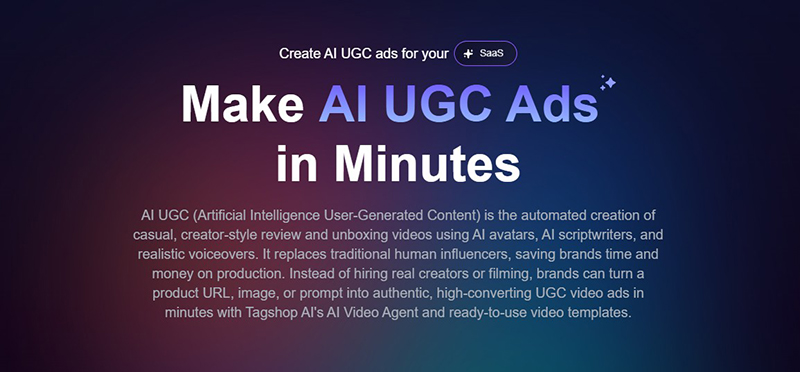
Tagshop AI is particularly well aligned with ecommerce because the product page itself can become the starting point for creative production.
Users can paste a product URL from platforms such as Shopify, Amazon, WooCommerce, or another ecommerce site.
The system can then use product information, images, and descriptions to help create a script, select an avatar and voice, add captions, incorporate B-roll, and generate a social-ready video.
This may sound like a small convenience, but it becomes important when working with a large product catalog.
A store with dozens or hundreds of SKUs does not want marketers manually copying product descriptions, benefits, specifications, and visuals into a video tool for every new campaign.
URL-to-video workflows dramatically reduce that setup time. Fashion stores exploring a more interactive customer experience can also compare our AI virtual try-on platforms for fashion ecommerce.
Tagshop also includes AI-assisted workflows for creating storyboards, ad concepts, and product-focused video.
Pricing: Current paid plans begin at approximately $29 per month, with larger Growth and Pro plans available for higher production volume.
Why choose Tagshop AI: It offers one of the most practical workflows for ecommerce brands that want to turn existing product pages into ads quickly.
6. Pippit
Best for: Ecommerce sellers creating product-led content for multiple social platforms
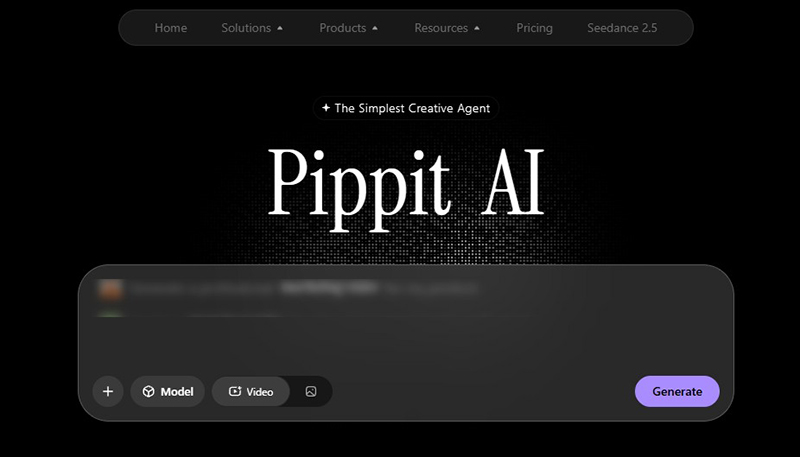
Pippit approaches AI advertising slightly differently from dedicated UGC avatar platforms.
It combines product information, script generation, AI avatars, video production, and social editing features in a broader content workflow.
Users can provide product links or upload product assets and generate social-ready video using AI voices, avatars, and automated creative tools.
Pippit also provides editing features such as captions, reframing, overlays, background removal, transitions, and other tools needed to finish social content.
That editing layer is valuable because AI UGC generation rarely ends when the actor finishes speaking.
Marketers may still need to:
- Add product B-roll
- Adjust subtitles
- Change aspect ratios
- Improve pacing
- Add visual overlays
- Create platform-specific versions
Pippit tries to keep more of that work inside one environment.
Pricing: A free option is available, while paid tiers increase AI credits and production capacity.
Why choose Pippit: It is particularly useful for ecommerce teams creating both paid advertising and ongoing organic social content.
7. HeyGen
Best for: Multilingual campaigns and polished AI avatar content
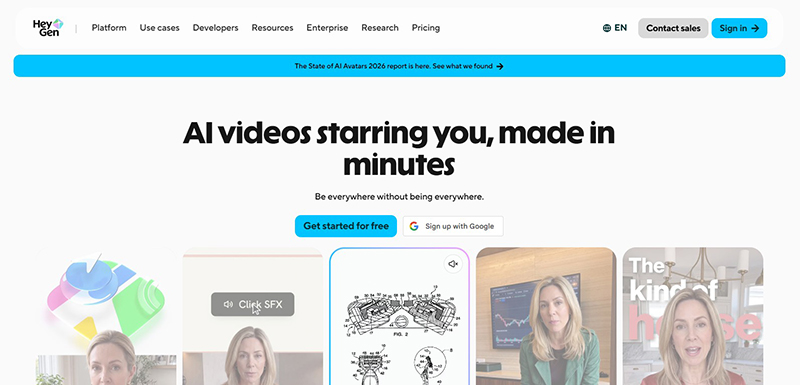
HeyGen is one of the most established AI avatar platforms, although its use cases extend far beyond UGC advertising.
That broader positioning can be an advantage.
HeyGen can be used for advertising, explainers, onboarding, product education, localization, presentations, and social content.
For international marketers, localization is one of its strongest features.
A brand selling across the United States, Germany, France, Spain, and other markets may not want to organize a separate creator shoot for every region.
An AI avatar workflow can adapt the same campaign into different languages without rebuilding the entire production from zero.
HeyGen also supports custom avatars, voice cloning, multilingual video, and a large collection of digital presenters.
The trade-off is style.
HeyGen videos can sometimes look more polished and presenter-led than deliberately casual UGC.
That may be ideal for SaaS, professional services, education, finance, or premium brands, but it may be less suitable when the goal is to imitate an intentionally spontaneous TikTok review.
Pricing: HeyGen provides a free plan, with paid Creator plans starting at approximately $29 per month.
Why choose HeyGen: It is particularly strong when multilingual production and polished avatar quality matter as much as UGC aesthetics.
8. invideo AI
Best for: Agentic end-to-end AI advertising workflows
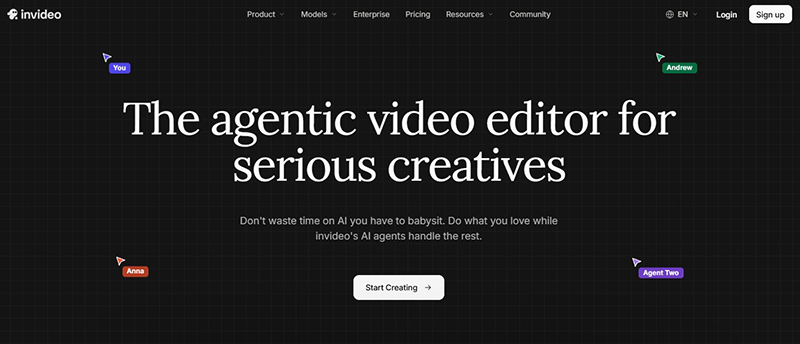
invideo AI represents another major direction in AI content production: moving away from isolated generators toward AI systems capable of coordinating multiple creative steps.
Instead of simply selecting an avatar and pasting a script, marketers can describe the video they want in natural language.
For example:
Create a 30-second TikTok ad for this skincare product. Target women aged 25–34. Open with a problem-focused hook, show the product in a bathroom environment, include two product benefits, and finish with a direct CTA.
The system can then coordinate scripting, scenes, visuals, voice, and video assembly inside a broader production workflow.
This becomes especially useful for more complex UGC-style ads that combine:
- AI actors
- Product scenes
- B-roll
- Generated environments
- Voiceovers
- Text overlays
- Multiple scenes
The trade-off is credit consumption. Complex generative video workflows may require significantly more resources than a straightforward talking-avatar video.
Pricing: Paid plans currently begin at roughly $20 per month with annual billing, with higher tiers providing more AI generation capacity.
Why choose invideo AI: It is particularly interesting for marketers experimenting with AI-native advertising production rather than simply replacing human presenters.
9. Predis.ai
Best for: Social teams that want generation, planning, and publishing together
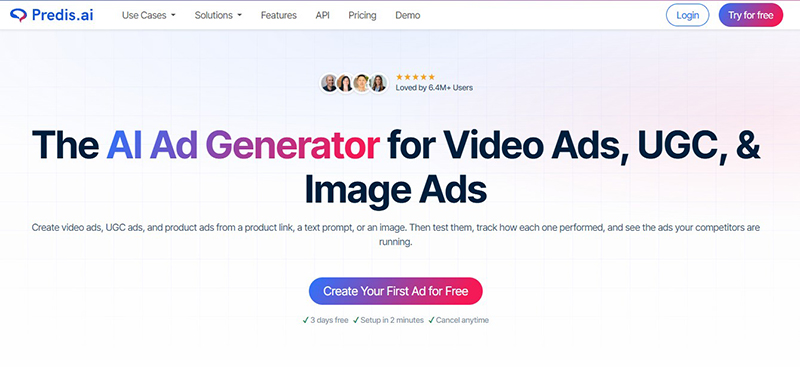
Predis.ai solves a different problem from more specialized UGC platforms.
It combines AI advertising, social media content, ecommerce creatives, video production, competitor analysis, and publishing.
That makes it particularly useful for small marketing teams managing several social platforms.
Imagine an ecommerce company that needs:
- An Instagram post on Monday
- A product carousel on Tuesday
- A Reel on Wednesday
- Two new ad concepts on Thursday
- A promotional campaign on Friday
A specialized UGC platform might create excellent avatar videos, but the business would still need additional tools for the rest of its content calendar.
Predis becomes attractive because more of that workflow can stay inside one ecosystem.
Pricing: Paid plans currently start at approximately $24 per month with annual billing.
Why choose Predis.ai: It is better suited to teams that need an integrated social media workflow rather than only an AI actor generator.
10. Captions / Mirage
Best for: Expressive AI actors and advanced generative video
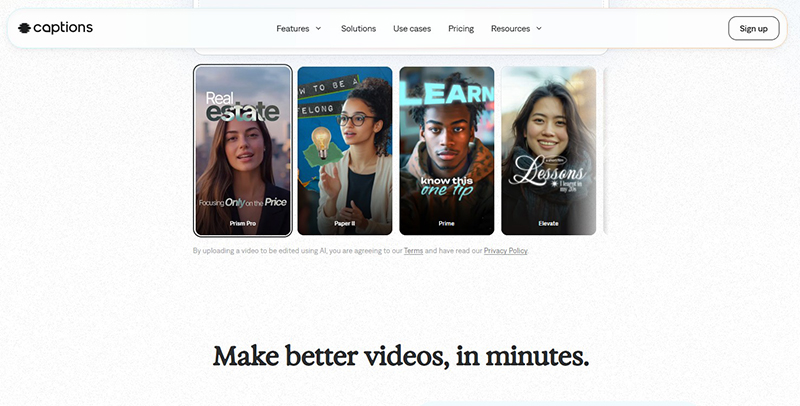
Captions and its Mirage technology take a more generative approach to AI actors and social video.
Rather than relying entirely on predefined talking avatars, newer generative systems are moving toward synthesizing more of the performance itself, including appearance, expression, motion, camera behavior, and delivery.
This is an important distinction.
Traditional avatar software often feels like a digital presenter reading a script.
Generative acting aims to create something closer to a filmed performance.
For advertisers, that can be particularly valuable for hooks, product ads, short social scenes, one-liners, and visually expressive UGC-style creative.
Captions has also expanded significantly into broader AI video production, making it one of the more interesting platforms to watch as synthetic performances become more realistic.
The downside is that some of the most advanced business and advertising capabilities may be tied to higher-tier plans.
Why choose Captions / Mirage: It is particularly interesting for brands experimenting with the next generation of fully generative actors and social advertising.
What Makes a Good AI UGC Generator in 2026?
Choosing an AI UGC tool based only on avatar realism is a mistake.
A convincing face does not automatically create a convincing advertisement.
For performance marketing, the entire production system matters.
When comparing AI UGC platforms, consider the following factors:
- Actor realism: Does the person look natural enough for the intended platform?
- Product integration: Can the product appear naturally in scenes or in the actor’s hands?
- Hook generation: Can the platform create multiple opening angles?
- Script quality: Does the copy sound like social content rather than corporate advertising?
- URL-to-video: Can the platform extract information directly from a product page?
- Editing control: Can individual scenes be modified without regenerating everything?
- Localization: How many languages and voices are supported?
- Batch generation: Can you produce many variations efficiently?
- Output formats: Does it support TikTok, Reels, Shorts, square ads, and horizontal formats?
- Cost of iteration: How many credits does it take to regenerate or revise an ad?
The last factor is particularly important.
A plan that technically supports dozens of videos may still become expensive if every small change requires regenerating the entire project.
AI UGC vs. Real UGC: Should Brands Replace Human Creators?
Not completely.
AI removes a large amount of production friction, but human creators still have something generative systems cannot authentically manufacture: real experience with the product.
A real customer can genuinely say:
I’ve used this product for three months.
An AI actor cannot truthfully make that claim based on personal experience.
This distinction matters because user-generated content works partly because viewers interpret it as authentic personal experience rather than conventional advertising. The same trust issue appears in synthetic product imagery, which we explore in How AI Is Changing Ecommerce Photography: Creativity, Scale and the Trust Problem.
AI is especially useful for:
- Creative iteration
- Product explainers
- Scripted demonstrations
- Localization
- Hook testing
- Paid social variations
- Different actors and formats
- Rapid creative testing
Real creators remain particularly valuable when genuine experience, community reputation, trust, personality, or social proof drives the message.
The strongest strategy may therefore not be AI versus creators.
It may be:
AI for the volume layer + human creators for the authenticity layer.
A Better AI UGC Workflow for Ecommerce Brands
Rather than asking an AI platform to simply “make an ad,” start with structured testing.
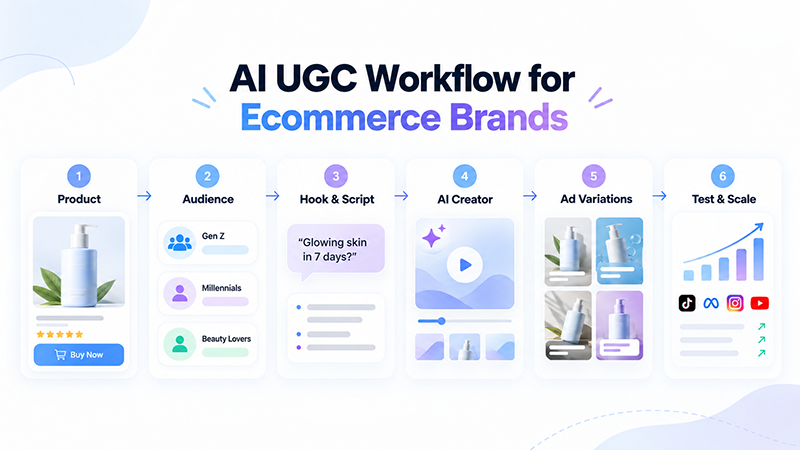
Take one product and identify several genuinely different customer problems, desires, or motivations.
For example:
- Problem-focused angle: What frustrating problem does the product solve?
- Benefit-focused angle: What result does the customer want?
- Convenience angle: How does the product make something easier?
- Demonstration angle: Can the product be shown visually?
- Comparison angle: How is the product different from common alternatives?
Then create several hooks for each angle.
Keep the offer constant while changing the actor, opening three seconds, framing, pacing, and CTA.
Test those variations.
Once one creative direction performs well, create more versions instead of immediately abandoning the concept.
You can:
- Change the opening shot
- Change the speaker
- Shorten the video
- Try another CTA
- Add a demonstration
- Localize the campaign
- Create new platform-specific versions
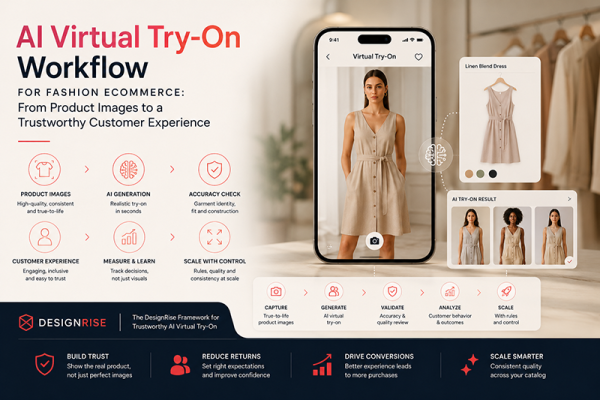
This is where AI UGC becomes significantly more useful than traditional video production. For fashion merchants, a similar workflow-first approach is useful when implementing AI virtual try-on for Shopify or building a broader AI virtual try-on workflow.
The goal is not simply cheaper video.
The goal is faster creative learning.
The Rise of AI Advertising Agents
One of the biggest developments in 2026 is that ad creation is moving beyond individual AI generators.
Platforms are increasingly introducing agentic workflows that can research products, generate concepts, create scripts, produce visuals, and coordinate multiple creative steps.
Major advertising platforms are moving in the same direction.
TikTok, for example, continues expanding its Symphony AI ecosystem for advertisers, combining creative assistance, generative production, and campaign-oriented AI tools.
This suggests the next generation of AI UGC software will not simply ask:
What script do you want this avatar to read?
Instead, the system may increasingly ask:
What are you selling, who are you selling it to, what creative has already worked, and what should we test next?
That represents a much more important shift than avatar generation alone.
Which AI UGC Generator Should You Choose?
There is no single AI UGC platform that makes sense for every brand.
Creatify is particularly strong when performance marketing and product-to-ad automation are priorities.
Arcads makes sense for teams producing large volumes of creator-style ads and actor variations.
MakeUGC is highly focused on dedicated AI UGC production.
Tagshop AI provides an accessible ecommerce-first product URL-to-video workflow.
AdCreative.ai works well when UGC needs to sit alongside a broader advertising creative toolkit.
Pippit is attractive for product-led social content and post-generation editing.
HeyGen is particularly useful for multilingual campaigns and polished avatar video.
invideo AI stands out for more complex AI-driven production workflows.
Predis.ai suits smaller social teams that want content creation and publishing in one system.
Captions / Mirage is worth watching as generative acting and fully synthetic video production become increasingly sophisticated.
The right choice depends less on which platform creates the most impressive demo and more on how well it fits your actual creative-testing workflow.
Frequently Asked Questions
What is the best AI UGC ad generator in 2026?
The strongest option depends on the workflow. Creatify and Arcads are heavily focused on performance advertising and creative iteration, MakeUGC specializes in AI creator content, and Tagshop AI offers a convenient ecommerce product URL-to-video workflow. HeyGen is particularly useful when multilingual avatar content is a major priority.
Can AI create UGC ads from a product URL?
Yes. Several modern AI UGC platforms can use a product URL as the starting point for video creation. They can extract product information and visuals before generating scripts, actors, voiceovers, captions, and advertising assets.
Can AI UGC generators create TikTok and Instagram ads?
Yes. Most dedicated AI UGC tools support vertical 9:16 video designed for TikTok, Instagram Reels, YouTube Shorts, and paid social campaigns. Many platforms also support square and horizontal formats for additional placements.
Is AI UGC the same as user-generated content?
No. Real UGC is created by an actual customer or creator. AI UGC recreates the visual and narrative style of creator content using synthetic actors, voices, scripts, or generated scenes.
Are AI UGC ads cheaper than hiring creators?
They can be significantly cheaper when a brand needs many variations because actors, locations, hooks, languages, and scripts can be changed without organizing another shoot. However, the true cost depends on credit consumption, failed generations, editing, and the number of variations required.
Can AI UGC generators show an actor holding my product?
Some platforms can generate product-in-hand scenes or other forms of AI product placement. The quality can vary depending on packaging, text, reflections, product geometry, hands, and fine visual details.
Should brands use AI UGC instead of real creators?
Usually not exclusively. AI is particularly useful for testing, localization, rapid production, and creative scale. Real creators remain valuable when genuine product experience, trust, reputation, personality, or community influence is central to the campaign.
Final Thoughts
AI UGC advertising is moving from a novelty into a serious creative production category.
The most important change is not simply that marketers can generate a digital person who speaks a script.
That has been possible for several years.
What is changing in 2026 is the entire workflow around the video.
Product research, scripting, casting, localization, editing, variant generation, and even parts of creative strategy are increasingly becoming connected inside the same AI system.
That makes the technology particularly relevant to ecommerce brands, where winning advertising rarely comes from creating one perfect video.
It comes from repeatedly finding new ways to communicate the same product value to the right audience.
AI UGC generators make that experimentation dramatically easier.
And as AI advertising agents become more capable, the competitive question will increasingly move from:
Can AI make this ad?
to:
How quickly can we discover which creative idea actually deserves our advertising budget?
Discover more from DesignRise
Subscribe to get the latest posts sent to your email.