
AI-Powered Ad Creatives: Trends, Tools & Strategies for Modern Advertising
The advertising world is entering a new era — one where AI-powered ad creatives are no longer a nice addition, but a core part of modern marketing. Brands, designers, agencies, and performance marketers are shifting toward faster, smarter, and more automated creative workflows powered by generative AI.
Modern AI advertising tools can help generate visuals, write ad copy, create product scenes, produce short videos, personalize campaign variations, and optimize creative performance at scale. What once required large creative teams, expensive photo shoots, and long production timelines can now be tested and refined much faster with the help of artificial intelligence.
For designers and marketers, this shift is not only about speed. It is about building a more flexible creative system where ideas can be tested quickly, visual assets can be adapted for different platforms, and campaigns can become more personalized, data-driven, and performance-focused.
In this DesignRise guide, we’ll explore how AI ad creatives are reshaping modern advertising — from intelligent ad variations and AI-generated video ads to hyper-personalization, real-time optimization, ethical AI use, and the future role of human creativity.
You May Also Like:
- 10 Figma Tricks I Wish I Had Known Earlier
- Who Owns AI-Generated Creativity? Inside the Growing Copyright Debate
- Top AI Photo Editing Tools Designers Can’t Live Without
Below, you’ll find a practical overview of the most important AI advertising trends, creative workflows, tools, and strategies that designers and marketers can use to create stronger campaigns with less manual production work.
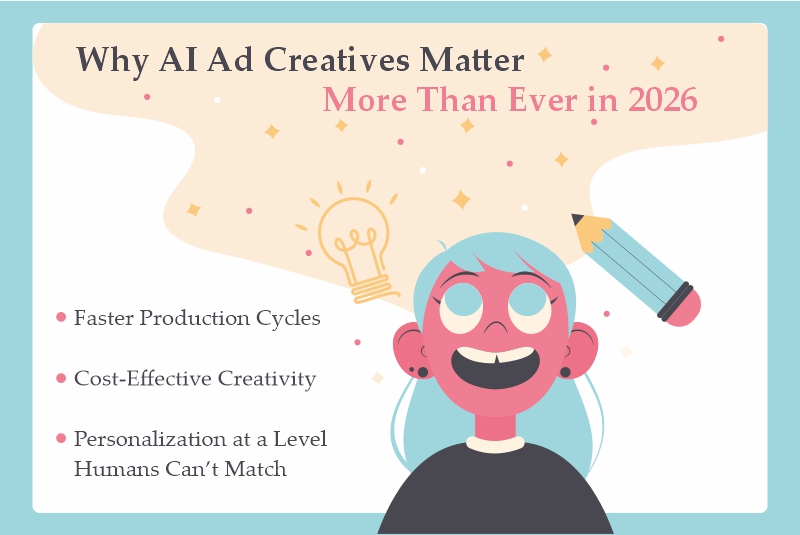
Why AI Ad Creatives Matter More Than Ever
The digital advertising landscape moves faster every year. There are more platforms, more formats, more competitors, and more content fighting for attention. Traditional production workflows are often too slow and too expensive to keep up with the speed of modern campaigns.
This is where AI-powered ad creatives become valuable. They allow creative teams to produce, test, and optimize more variations in less time. Instead of relying on one banner, one headline, or one video concept, marketers can create dozens or even hundreds of creative directions and quickly identify what works best.
AI can support almost every stage of the advertising process: research, concept development, visual generation, copywriting, editing, personalization, testing, and performance analysis. For brands that need to move quickly, this creates a major competitive advantage.
1. Faster Production Cycles
AI tools can generate entire ad packages in minutes — banners, short videos, product shots, captions, background variations, scripts, and platform-specific creative formats. This dramatically shortens the time between idea and launch.
A campaign that once required several rounds of design, photography, editing, and approval can now begin with AI-assisted concepts and rapid visual exploration. Designers can then refine the strongest ideas instead of spending all their time on repetitive production tasks.
This does not mean creativity becomes less important. It means the creative process becomes faster and more experimental. Teams can test more angles, visual styles, and messages before committing to a final campaign direction.
2. Cost-Effective Creative Production
Brands increasingly rely on AI to scale campaigns without needing large production budgets for every test. AI models can generate product renders, simulate environments, create ad variations, adapt visuals for different regions, and produce quick concept previews.
This is especially useful for startups, small businesses, eCommerce brands, and agencies that need high-quality campaign assets but do not always have the budget for large creative shoots.
- Generate product mockups and lifestyle visuals
- Create multiple background options for one product
- Adapt visuals for different countries or audiences
- Produce concept ads before investing in final production
- Test more campaign ideas with lower creative risk
Lower production costs make it easier to experiment. More experimentation usually leads to better campaign insights, stronger creative decisions, and improved advertising performance.
3. Personalization at a Scale Humans Can’t Match
One of the biggest advantages of AI in advertising is the ability to create personalized creatives at scale. AI can analyze audience behavior, interests, trends, purchase intent, location, and real-time campaign data.
Based on this information, AI can generate different versions of an ad for different audience segments. This may include changes in headline, color palette, background scene, product focus, call to action, or even video storyline.
Personalized AI ad creatives can help improve:
- Click-through rates
- Engagement
- Conversion rates
- Audience relevance
- Brand recall
- Customer loyalty
The key is to use personalization thoughtfully. Good personalization feels helpful and relevant. Poor personalization can feel invasive or unnatural. The strongest campaigns balance data-driven targeting with clear brand strategy and human judgment.
Top AI Creative Trends in Advertising
AI advertising is moving quickly, but several major trends are already shaping the way brands plan, produce, and optimize campaigns. These trends are especially important for designers, marketers, creative agencies, eCommerce teams, and content creators who want to stay competitive.
4. AI-Generated Video Ads Are Becoming the Default
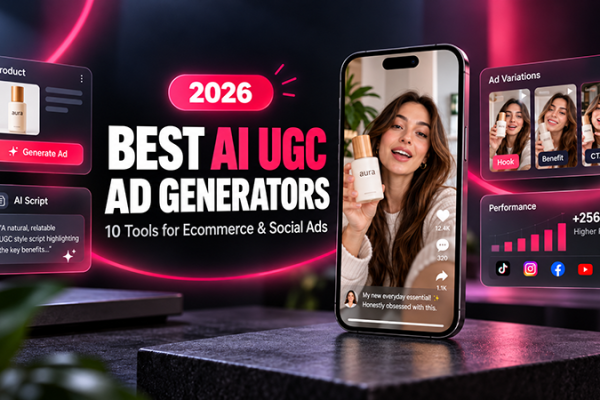
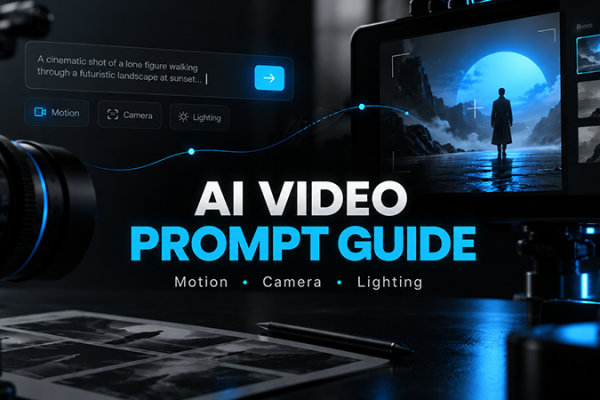
AI video generation is one of the most important shifts in modern advertising. Text-to-video and image-to-video tools can now create product demos, promo animations, short social ads, cinematic product scenes, and campaign variations without traditional filming.
This is especially useful for TikTok, Instagram Reels, YouTube Shorts, Pinterest, Meta ads, and other platforms where short-form video content performs strongly.
AI video tools can help create:
- Product demo videos
- Social media ad clips
- Animated product launches
- Vertical video campaigns
- Cinematic commercial-style edits
- Explainer videos and promotional scenes
For example, a designer can write a prompt such as: “15-second ad, energetic mood, showcasing eco-friendly packaging,” and AI can generate multiple visual directions. The designer can then choose the best version and polish it for the final campaign.
5. Hyper-Personalized Ad Variations at Scale
AI makes it possible to generate thousands of micro-creatives customized for different audiences, platforms, and campaign goals. Instead of creating one generic ad, brands can create many variations designed for specific user groups.
AI-generated ad variations can be adapted based on:
- Age group
- Location
- Language
- Interests
- Browsing behavior
- Purchase intent
- Platform format
- Customer lifecycle stage
This allows marketers to move beyond one-size-fits-all banners and build campaign systems that feel more relevant to each audience segment. A product ad for a returning customer may look different from an ad shown to someone discovering the brand for the first time.
6. Multimodal AI Models Combine Text, Images, Audio, and Video
Creative teams are increasingly working with multimodal AI systems that can understand and generate different types of content. Instead of using separate tools for writing, image generation, video editing, and performance analysis, marketers can use AI workflows that combine several creative tasks.
Multimodal AI models can support:
- Writing ad copy and headlines
- Generating campaign visuals
- Creating product scenes
- Producing voiceovers
- Editing short videos
- Analyzing campaign performance
- Suggesting creative improvements
This creates a more connected workflow. A team can move from idea to visual concept, from visual concept to video, and from video to performance optimization much faster than before.
DesignRise also explores related creative automation topics in our AI workflow guides, where we look at how AI can support design, branding, marketing, and content production.
7. Intelligent Optimization With Real-Time Feedback
AI no longer only creates ads. It can also study performance and help improve campaign assets based on real-time data. This is one of the biggest changes in performance marketing because creative optimization can now happen much faster.
For example:
- Low CTR? AI can suggest a stronger headline.
- Low engagement? AI can test different visuals.
- Poor video retention? AI can adjust pacing or scene order.
- Weak conversions? AI can recommend a clearer call to action.
This creates a continuous cycle of creative improvement. Instead of waiting until the end of a campaign to analyze performance, marketers can improve ads while campaigns are still running.
8. Ethical and Transparent AI Advertising
As AI-generated advertising becomes more common, transparency becomes more important. Consumers want to know when brands use synthetic voices, AI-generated people, manipulated environments, or fully artificial visuals.
Ethical AI advertising is not only about following regulations. It is also about building trust. Brands that are honest about how they use AI are more likely to maintain credibility with their audience.
Important ethical considerations include:
- Avoid misleading AI-generated visuals
- Be careful with synthetic people and voices
- Respect copyright and licensing rules
- Do not copy protected brand styles without permission
- Disclose AI use when required
- Keep human review in the creative process
AI can be powerful, but it should support responsible storytelling rather than create deceptive advertising experiences.
What AI-Powered Ad Creation Looks Like in Practice
A strong AI advertising workflow still needs strategy, direction, and human decision-making. The most effective teams use AI as a creative assistant, not as a replacement for brand thinking.
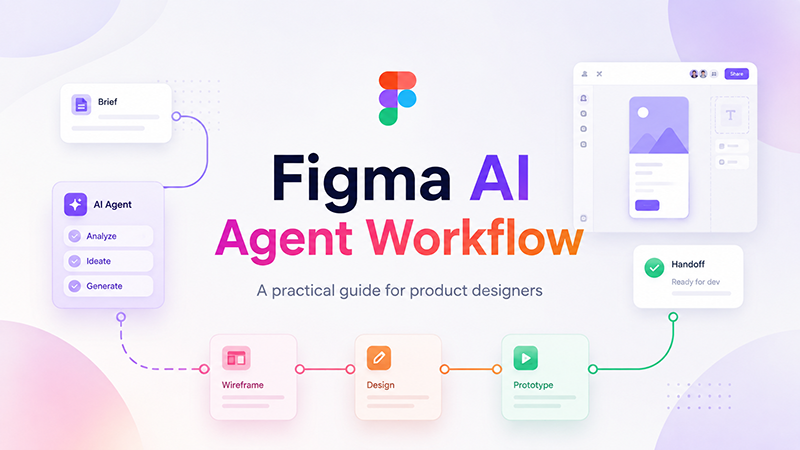
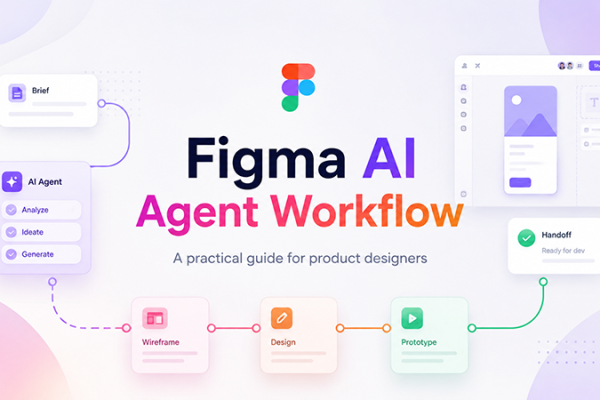
9. Write a Strong Creative Brief
Every successful AI ad campaign begins with a clear creative brief. The brief should define the target audience, product benefit, emotional tone, platform, campaign goal, visual direction, and main message.
AI performs better when the input is specific. A vague prompt usually creates generic results, while a strong brief helps generate more useful creative options.
Creative brief elements:
- Target audience
- Product or service offer
- Campaign goal
- Main benefit
- Brand tone
- Visual style
- Platform format
- Call to action
10. Generate Visual and Video Concepts
After the brief is ready, AI can generate static visuals, product scenes, short video concepts, social media layouts, and creative variations. At this stage, the goal is not perfection. The goal is exploration.
Designers can compare multiple directions, select the strongest ones, and refine them into final campaign assets. This makes early creative development faster and more flexible.
11. Create Copy Variations for Different Audiences
AI can generate headlines, descriptions, captions, hooks, and calls to action for different audience segments. This is useful because one message rarely works equally well for every customer group.
For example, a campaign for a productivity app may need one version focused on freelancers, another for agencies, and another for corporate teams. AI can help produce different angles quickly, while marketers choose the strongest options.
12. Test and Rank Creative Variations
Once multiple ad versions are ready, AI tools can help predict performance, compare variations, and identify which creative assets may be more effective. While prediction is not perfect, it can help teams prioritize which ads to test first.
This is especially valuable when campaigns include many formats, audiences, and platforms. AI-assisted testing helps reduce guesswork and makes creative decision-making more data-informed.
13. Optimize Campaigns in Real Time
After launch, AI can monitor campaign results and recommend improvements based on performance data. This may include new headlines, adjusted visuals, different video pacing, alternative CTAs, or stronger audience-specific messaging.
Real-time optimization helps brands avoid wasting budget on weak creative assets and gives marketers more opportunities to improve performance while campaigns are active.
14. Add Human Creative Direction
The final and most important step is human review. AI can generate many ideas, but designers and marketers still need to make strategic decisions. Human creativity is essential for taste, emotion, brand consistency, cultural awareness, and storytelling.
The strongest advertising results come from a combination of AI speed and human judgment. AI can accelerate production, but people still guide the message, meaning, and emotional impact.
Best AI Tools for Ad Creatives