







What Is an AI Shopping Assistant?
An AI shopping assistant is a digital tool that uses artificial intelligence to help people search for products, compare options, understand reviews, track prices, discover deals, or complete shopping tasks through conversation. Instead of relying only on keywords and filters, users can describe what they need in natural language.
A traditional shopping search usually works like this: you type a keyword, scan results, open product pages, read reviews, compare prices, and decide manually. An AI shopping assistant works more like a personal shopper. You explain the goal, budget, preferences, occasion, style, size, or constraints, and the assistant helps narrow the choices.
The best AI shopping assistants usually combine several features:
- Conversational product search: ask for products using natural language instead of exact keywords.
- Personalized recommendations: get suggestions based on preferences, budget, style, past orders, or shopping intent.
- Review summaries: understand common pros and cons without reading hundreds of reviews.
- Price comparison: compare prices, deals, coupons, or availability across merchants.
- Visual search: upload a photo or screenshot to find similar items.
- Cart building: create baskets for groceries, gifts, outfits, home products, or multi-item purchases.
- Checkout support: some tools can prepare checkout or help complete purchases through connected platforms.
- Order help: track orders, check return policies, or reorder items you bought before.
In 2026, the category is moving beyond simple chatbots. AI shopping assistants are becoming part of a larger shift toward agentic commerce, where AI does not only recommend products but can also help take action. This does not mean shoppers should blindly trust every recommendation. It means the buying journey is becoming more conversational, personalized, and automated.
Why AI Shopping Assistants Matter in 2026
AI shopping assistants matter because online shopping has become overwhelming. Shoppers face too many products, too many reviews, too many ads, too many sponsored placements, and too many small differences between similar items. The problem is no longer access to products. The problem is decision fatigue.
When every product page claims to be the best, shoppers need help answering practical questions:
- Which option is actually worth the money?
- What are the real tradeoffs between these products?
- Which reviews mention the same issue again and again?
- Is this product good for my specific use case?
- Can I find something similar for less?
- Is there a better alternative from another retailer?
- Will this gift, outfit, device, or household item fit the person I am buying for?
That is where AI shopping tools become useful. They can summarize information, compare features, ask follow-up questions, and make product discovery feel less like a search results page and more like a guided conversation.
This shift is especially important for DesignRise readers because shopping AI affects more than consumers. It affects eCommerce design, content strategy, product descriptions, SEO, affiliate marketing, conversion optimization, and brand visibility. If shoppers increasingly ask AI assistants what to buy, brands need product pages that AI can understand, compare, and recommend.
In other words, AI shopping assistants are not just a convenience feature. They are part of the future of search, eCommerce, and digital product discovery.
Explore More DesignRise Resources
If you are building a smarter AI workflow, these DesignRise collections can help you go deeper:
Quick Comparison: Best AI Shopping Assistants in 2026
Here is a quick overview of the top AI shopping assistants and AI-powered shopping experiences worth watching in 2026.
| AI Shopping Assistant | Best For | Main Strength | Best User Type |
|---|---|---|---|
| ChatGPT Shopping Research | Product research and buying guides | Conversational comparison and decision support | General shoppers, creators, researchers |
| Amazon Alexa for Shopping | Shopping inside Amazon | Product comparison, history, price tracking, Amazon ecosystem | Amazon shoppers |
| Google AI Shopping | Search-based product discovery | AI Mode, Gemini, Universal Cart, broad web shopping | Google users and comparison shoppers |
| Perplexity Shopping | AI search plus product discovery | Cited shopping answers and product cards | Research-first shoppers |
| Walmart Sparky | Walmart product search and meal planning | Review synthesis, product discovery, grocery help | Walmart customers and families |
| Klarna Shopping Search | Price-aware shopping inside ChatGPT | Visual results, live prices, offers, multi-merchant discovery | Deal-conscious shoppers |
| Shop Personal AI Agents | Product search, checkout, order tracking | Connect Shop to personal AI agents | Shop Pay users and multi-store shoppers |
| Microsoft Copilot Shopping | Deal finding and product comparison | Price tracking, comparison, shopping support in Copilot | Microsoft Copilot users |
| Target AI Shopping Experiences | Gift discovery and retail shopping | Conversational product discovery through Target and AI platforms | Target shoppers |
| Etsy AI Shopping Integrations | Handmade, unique, and creative product discovery | AI-powered discovery through ChatGPT, Gemini, and AI Mode | Gift shoppers and creative buyers |
| Daydream AI for Fashion | Fashion discovery and styling | Personal fashion shopping through conversation and screenshots | Fashion shoppers |
| Shopify AI Shopping Assistants | AI assistants for online stores | Storefront chat, product recommendations, conversational selling | eCommerce brands and Shopify merchants |
Best AI Shopping Assistants in 2026
Below are the strongest AI shopping assistants and AI-powered shopping experiences to know in 2026. Some are consumer-facing tools, while others are platform-level shopping systems or merchant-side assistants that shape how customers discover and buy products online.
1. ChatGPT Shopping Research
Best for: researching products, comparing options, and building thoughtful buying guides.
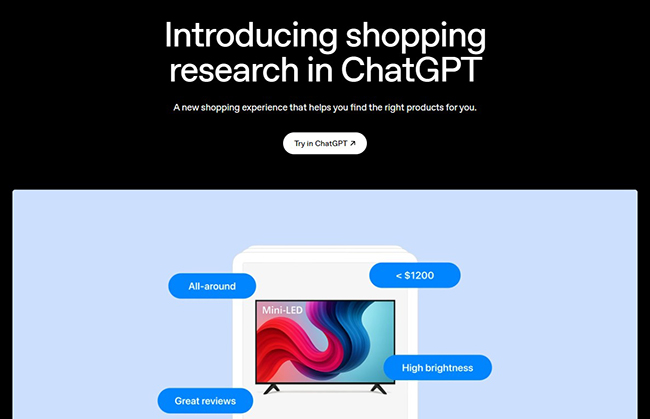
ChatGPT Shopping Research is one of the most important AI shopping experiences to watch in 2026 because it turns product discovery into a guided conversation. Instead of searching across multiple sites manually, users can describe what they need and receive a structured shopping guide based on the request.
This is especially useful when your shopping decision involves tradeoffs. For example, you may not simply want “best headphones.” You may want wireless headphones for long work calls, low ear pressure, strong microphone quality, good battery life, and a budget under $150. That kind of intent is difficult to capture with a basic keyword search, but it fits conversational AI very well.
ChatGPT Shopping Research is helpful for categories where comparison matters: electronics, home appliances, gifts, baby products, travel gear, fitness equipment, kitchen tools, office accessories, and personal care devices. It can help organize options, explain what features matter, and turn a messy search into a clearer shortlist.
The biggest advantage is flexibility. You can ask follow-up questions, remove products that do not fit, compare two options, request a cheaper alternative, or ask why one product may be better for your specific situation.
Why DesignRise recommends it: ChatGPT Shopping Research is a strong starting point when you do not know exactly what to buy yet. It helps turn vague shopping intent into a more structured decision.
- Good for complex product research and comparison.
- Helpful for shoppers who need guidance, not just a list of links.
- Strong for gifts, electronics, home products, and multi-criteria decisions.
- Best used with clear budgets, preferences, and constraints.
- Important claims should still be checked on retailer and manufacturer pages.
2. Amazon Alexa for Shopping
Best for: Amazon shoppers who want personalized product help inside the Amazon ecosystem.
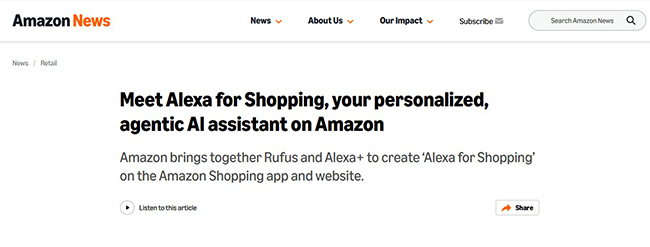
Amazon Alexa for Shopping builds on Amazon’s shopping AI experience and brings conversational shopping deeper into Amazon’s app, website, and Alexa-connected devices. For shoppers who already use Amazon regularly, this may become one of the most practical AI shopping assistants because it is connected to a massive product catalog, reviews, order history, and personalized shopping context.
Instead of typing short product keywords, shoppers can ask broader questions like what to buy for a specific need, how two products compare, whether a product fits a certain use case, or when they last bought an item. This is useful because many Amazon searches are not simple. A user may want the best skincare routine for a specific skin type, the right school supplies for a child, or a replacement product similar to something they bought before.
Amazon’s biggest advantage is purchase history and retail context. A general AI assistant may know product information from the web, but Amazon can connect shopping help to what the user bought, browsed, saved, or reordered inside Amazon.
That said, shoppers should remember that Amazon’s assistant is built inside Amazon. It is excellent for Amazon shopping, but it may not always be the best neutral tool for comparing every retailer across the web.
Why DesignRise recommends it: Alexa for Shopping is one of the most useful AI shopping assistants for everyday Amazon customers who want faster discovery, product comparison, reorder help, and price-aware shopping.
- Strong for Amazon product discovery and comparison.
- Useful for shoppers with Amazon purchase history.
- Helpful for reordering, finding alternatives, and understanding reviews.
- Works best inside Amazon’s retail ecosystem.
- For broader price comparison, use it alongside Google, Klarna, Perplexity, or ChatGPT.
3. Google AI Shopping
Best for: search-based shopping, product discovery, and agentic commerce across the web.
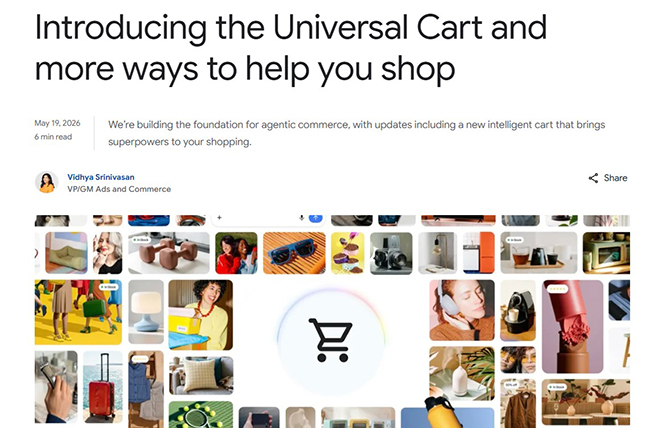
Google AI Shopping is important because Google is one of the biggest gateways to online shopping. In 2026, Google is moving shopping deeper into AI Mode, Gemini, and agentic commerce experiences, including systems designed to help users discover products and move closer to purchase through a more intelligent shopping flow.
For users, the appeal is simple: Google already sits at the beginning of many buying journeys. People search for “best running shoes for flat feet,” “affordable standing desk,” “gift ideas for new homeowners,” or “best carry-on luggage under $200.” AI-powered shopping can make those searches more helpful by understanding context and presenting options in a more guided way.
Google’s broader shopping strength is reach. It can connect product discovery, merchant listings, reviews, search intent, visual search, and checkout infrastructure. The future of Google shopping is not only a list of product cards. It is a more agent-like system that can help users move from question to product selection.
This matters for shoppers, but it also matters for brands. Product data, structured information, reviews, images, pricing, availability, and trust signals become more important when AI systems decide what to surface.
Why DesignRise recommends it: Google AI Shopping is essential to watch because it connects AI search with product discovery at massive scale. It is especially useful when you want to compare across many merchants instead of staying inside one store.
- Strong for broad product discovery across the web.
- Useful for comparison shopping and search-based buying journeys.
- Important for brands because AI search visibility may influence product discovery.
- Works best when paired with clear product criteria.
- Availability and features may vary by market and rollout stage.
4. Perplexity Shopping
Best for: research-first shoppers who want AI answers, product discovery, and source-backed comparison.

Perplexity Shopping is useful for people who like to research before they buy. Perplexity is known as an AI-powered answer engine, and its shopping experience brings that same research-first approach into product discovery.
Instead of only showing product listings, Perplexity can help summarize options, show product cards, surface relevant information, and support shopping decisions through conversational search. This is helpful when you want to understand the reasoning behind a recommendation instead of simply being pushed toward a sponsored product.
Perplexity is especially useful for categories where source quality matters: tech products, gear, appliances, tools, travel items, office equipment, and products where expert reviews or third-party references can influence the decision.
Its shopping experience is also interesting because it sits between an AI search engine and an AI shopping assistant. You can use it to research, compare, and explore before going to the final retailer or checkout option.
Why DesignRise recommends it: Perplexity Shopping is a good fit for users who want AI-powered product discovery but still care about sources, context, and comparison.
- Good for research-heavy shopping decisions.
- Useful for comparing products with explanations.
- Strong for shoppers who do not want to rely only on marketplace rankings.
- Helpful for discovering product alternatives.
- Always verify final price, availability, and seller details before buying.
5. Walmart Sparky
Best for: Walmart shoppers, grocery planning, review summaries, and practical household purchases.
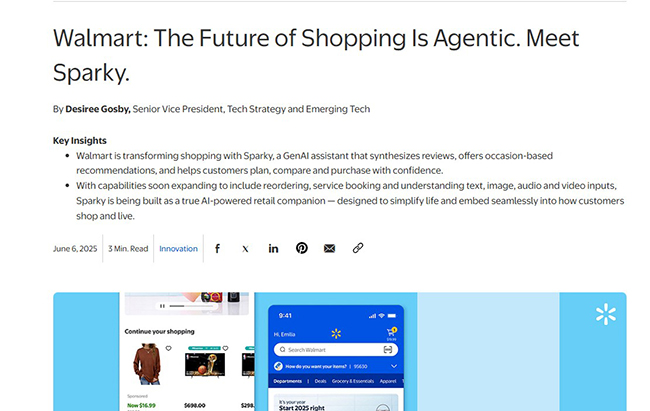
Walmart Sparky is an AI shopping assistant designed to help shoppers get things done faster inside Walmart. It can help find products, plan meals, synthesize reviews, and support purchase decisions with more context than a traditional search box.
This makes Sparky especially useful for everyday shopping. Many people use Walmart for groceries, household essentials, school supplies, electronics, health products, baby items, and home goods. These are categories where the shopper often has practical constraints: budget, availability, delivery speed, size, dietary needs, or family preferences.
For example, instead of manually building a grocery list from a meal idea, an AI shopping assistant can help connect the recipe, ingredients, product availability, and cart-building process. Instead of reading dozens of reviews for a product, it can summarize what customers commonly like or dislike.
Walmart’s advantage is real retail infrastructure. It is not only generating product ideas. It is connected to Walmart’s catalog, pricing, fulfillment, grocery options, and customer shopping flow.
Why DesignRise recommends it: Sparky is a practical AI shopping assistant for everyday buying, especially for families, grocery shoppers, and Walmart customers who want faster product discovery.
- Strong for Walmart shopping and everyday essentials.
- Helpful for meal planning and product research.
- Can synthesize review information for easier decisions.
- Useful for budget-conscious and convenience-focused shoppers.
- Works best when the shopper already uses Walmart regularly.
6. Klarna Shopping Search
Best for: visual shopping, price-aware discovery, and multi-merchant product search inside ChatGPT.
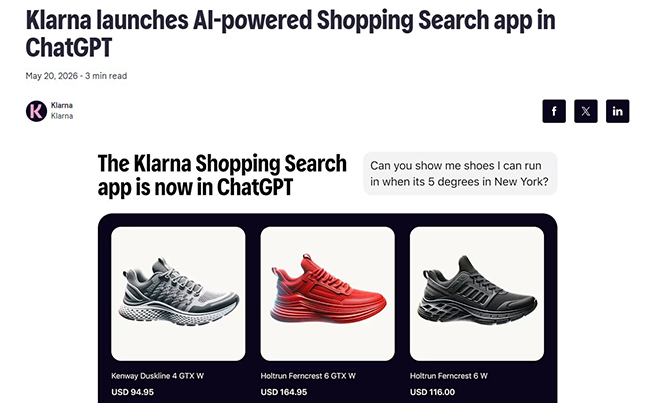
Klarna Shopping Search is one of the most interesting AI shopping tools for users who care about live prices, offers, and visual product discovery. Klarna’s shopping search app inside ChatGPT lets users describe what they are looking for and see product results with price and availability information from multiple merchants.
This is useful because AI shopping can become frustrating when product data is outdated. A shopper does not only need a nice recommendation. They need to know whether the item is available, what it costs now, and where to buy it.
Klarna is especially relevant for fashion, beauty, home goods, accessories, electronics, and lifestyle shopping where visual browsing and price comparison matter. A user can describe a style, budget, or occasion and receive more shopping-ready results than a generic text answer.
For deal-conscious shoppers, Klarna’s strength is that it connects AI discovery with commerce data. That makes it more practical than an assistant that only gives general advice.
Why DesignRise recommends it: Klarna Shopping Search is a strong choice when shoppers want AI-powered recommendations but still need current price, availability, and merchant options.
- Good for price-aware shopping discovery.
- Useful for visual products like fashion, beauty, home, and lifestyle items.
- Works inside ChatGPT for a conversational shopping flow.
- Helpful for comparing offers from multiple merchants.
- Final purchase still happens through the merchant site.
7. Shop Personal AI Agents
Best for: connecting personal AI agents with product search, checkout preparation, reorders, and order tracking.
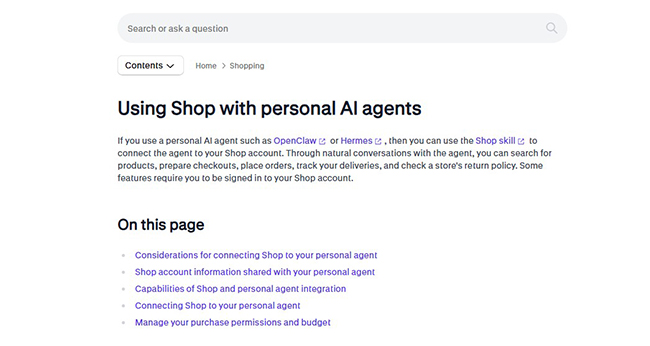
Shop personal AI agents are important because they show where shopping is going next: users connecting a trusted shopping account to an AI agent that can help search, prepare checkout, track orders, check return policies, and reorder products.
This is different from a normal shopping chatbot on one store. Shop connects with a broader shopping identity through Shop and Shop Pay. That means a personal AI agent can help with tasks that happen across purchases, not only inside one product page.
For example, a user can ask a connected personal agent to search for waterproof hiking boots under a certain budget, prepare checkout details for review, reorder a previous item, or check whether a product is returnable. This kind of workflow points toward a future where shopping assistants are not only recommendation engines but also task assistants.
For shoppers, the key benefit is convenience. For brands, the key lesson is that product data, policies, fulfillment details, and trust signals need to be readable by AI systems.
Why DesignRise recommends it: Shop personal AI agents are worth watching because they connect product discovery with real shopping tasks like checkout preparation, returns, and order tracking.
- Useful for AI-assisted product search and checkout preparation.
- Can help with reorders, return policies, and order tracking.
- Strong fit for Shop Pay users.
- Shows the future of personal AI shopping agents.
- Users should review permissions, spending limits, and checkout details carefully.
8. Microsoft Copilot Shopping
Best for: finding deals, comparing prices, tracking price drops, and shopping through Copilot.
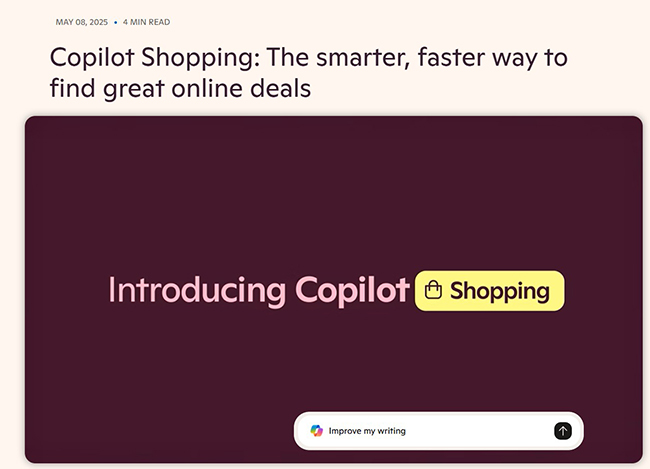
Microsoft Copilot Shopping helps users compare prices, track price drops, and find online deals through Copilot. It is especially useful for people who already use Microsoft Copilot as a daily assistant and want shopping help without switching into a separate tool.
This kind of assistant is useful when you know what you want but want to buy smarter. For example, you may be comparing laptops, monitors, office chairs, headphones, or home products and want to know where the better deal is, whether prices are dropping, or whether you should wait.
Copilot’s strength is that it can work as part of a broader productivity assistant. Shopping is not always separate from work. A small business owner might need office equipment. A creator might need camera gear. A student might need a laptop. A designer might need a tablet, monitor, or desk setup. Shopping support inside a general AI assistant can fit naturally into those workflows.
Why DesignRise recommends it: Copilot Shopping is useful for deal-focused product comparison, especially for Microsoft users who already rely on Copilot for research and everyday tasks.
- Good for comparing prices and finding deals.
- Useful for price tracking and purchase timing.
- Works well for practical products like electronics, office gear, and home items.
- Convenient for Copilot users.
- Availability and checkout features may depend on market and rollout.
9. Target AI Shopping Experiences
Best for: gift discovery, retail inspiration, and shopping inside Target’s ecosystem.

Target AI shopping experiences are especially interesting for gift shopping and retail discovery. Target has been building conversational AI-powered shopping features, including AI gift discovery and integrations that bring Target products into AI-powered shopping journeys.
This matters because gift shopping is one of the hardest categories for traditional search. People often do not know the exact product name. They know the person, the occasion, the budget, and a few preferences. That makes gift shopping a perfect use case for conversational AI.
For example, instead of searching “birthday gift,” a shopper can describe: “gift for a 7-year-old who loves science and building things, under $40” or “housewarming gift for a couple moving into a small apartment.” AI can turn that context into more useful product ideas.
Target’s advantage is that it combines inspiration with practical retail categories: home, kids, beauty, grocery, seasonal items, electronics, and everyday essentials.
Why DesignRise recommends it: Target AI shopping experiences are useful for shoppers who want practical recommendations with a strong retail catalog, especially for gifts, seasonal shopping, and household needs.
- Strong for gift discovery and retail inspiration.
- Useful for shoppers who need ideas, not exact product names.
- Good fit for home, kids, seasonal, beauty, and everyday categories.
- Works best for users who already shop at Target.
- AI recommendations should still be compared with reviews and availability.
10. Etsy AI Shopping Integrations
Best for: discovering unique, handmade, personalized, and creative products through AI-powered shopping surfaces.
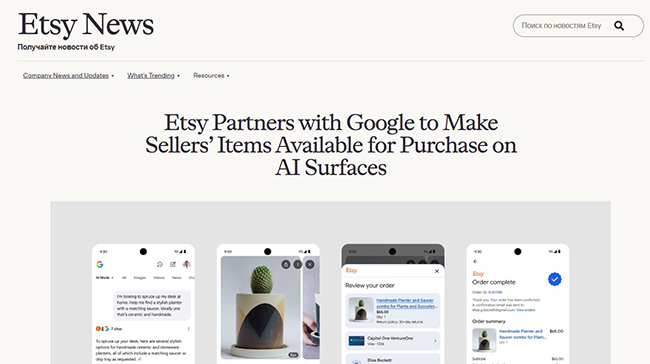
Etsy AI shopping integrations matter because Etsy is very different from big-box retail. Shoppers often visit Etsy when they want something personal, handmade, customized, artistic, vintage, or gift-worthy. These products can be harder to find with traditional search because language, style, and intent matter more.
AI-powered discovery can help shoppers describe what they want in a more natural way. For example: “personalized gift for a teacher who loves plants,” “minimalist handmade ceramic mug in earthy colors,” or “unique wedding favor under $10.” That kind of request benefits from AI because it includes emotion, style, occasion, and budget.
Etsy’s AI shopping integrations also show how independent sellers may be discovered in AI-powered environments like ChatGPT, Gemini, AI Mode, and Microsoft Copilot. For creators and small brands, this is an important signal: product titles, descriptions, images, categories, materials, personalization options, and shipping details need to be clear enough for AI systems to understand.
Why DesignRise recommends it: Etsy’s AI shopping direction is especially relevant for creative commerce. It shows how AI can help shoppers find products that are not generic, mass-market, or easy to describe with one keyword.
- Strong for unique, handmade, personalized, and creative products.
- Useful for gift discovery and style-based shopping.
- Important for small sellers and creative brands.
- Works best when product listings are clear and detailed.
- Shoppers should check seller reviews, shipping times, and customization details.
11. Daydream AI for Fashion
Best for: fashion discovery, personal styling, and shopping from screenshots.
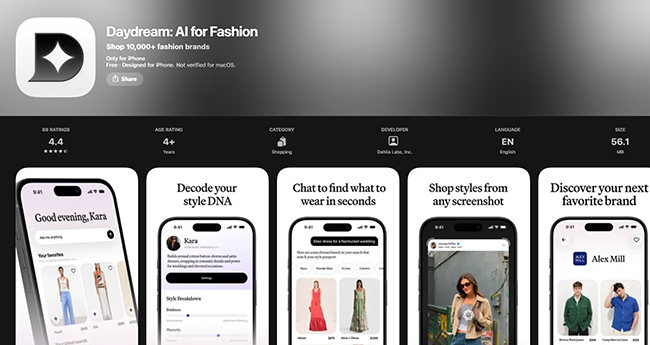
Daydream AI for Fashion is a fashion-focused AI shopping assistant that helps users discover clothing and style ideas through conversation. It is especially useful for shoppers who know the vibe they want but do not know the exact product name, brand, or search phrase.
Fashion shopping is often emotional and visual. A shopper may want “a relaxed coastal outfit for a summer dinner,” “boots that work with wide-leg jeans,” or “a minimalist black dress that does not feel too formal.” Traditional search can struggle with this because it depends heavily on keywords. AI can handle more descriptive intent.
Daydream is also useful because it supports screenshot-based shopping. Many fashion shoppers save inspiration from Instagram, Pinterest, TikTok, editorial photos, or brand websites. The ability to shop from visual inspiration makes AI fashion discovery more natural.
Why DesignRise recommends it: Daydream is one of the most interesting AI shopping assistants for fashion because it focuses on taste, context, and style rather than only price and product filters.
- Strong for fashion discovery and styling.
- Useful for shoppers who describe aesthetics, occasions, and outfit goals.
- Can help turn screenshots into shopping ideas.
- Best for fashion and lifestyle categories.
- Users should still check sizing, returns, materials, and seller policies carefully.
12. Shopify AI Shopping Assistants
Best for: eCommerce brands that want AI product recommendations, storefront chat, and conversational selling.
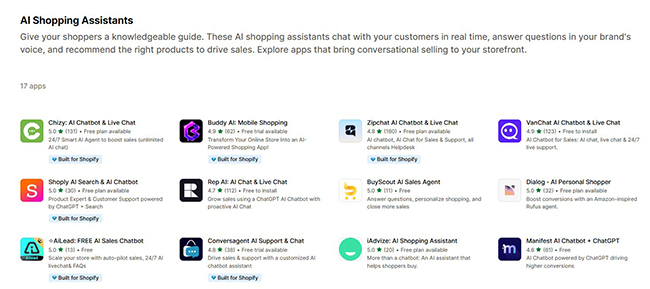
Shopify AI shopping assistants are a category of apps and storefront agents that help online stores answer customer questions, recommend products, guide shoppers, and improve the buying journey. These tools are not always used directly by consumers as standalone apps. Instead, shoppers experience them inside brand websites.
This category is important because many shoppers still buy directly from independent stores. A good AI shopping assistant on a Shopify store can act like a knowledgeable salesperson. It can answer questions about sizing, shipping, materials, compatibility, return policies, product differences, bundles, and availability.
For merchants, the value is clear: shoppers often leave because they cannot find the right product, do not understand the difference between options, or have one unanswered question before checkout. AI assistants can reduce friction by helping customers at the exact moment they are deciding.
For DesignRise readers who run eCommerce sites, this is one of the most practical AI categories to explore. It connects AI, UX, conversion design, customer support, and product discovery in one workflow.
Why DesignRise recommends it: Shopify AI shopping assistants are especially useful for small and mid-size eCommerce brands that want to turn passive browsing into guided product discovery.
- Good for product recommendations and storefront chat.
- Useful for answering customer questions in real time.
- Strong fit for Shopify merchants and DTC brands.
- Can improve product discovery, support, and conversion workflows.
- Requires clear product data, policies, and brand voice setup to work well.
How to Choose the Right AI Shopping Assistant
The best AI shopping assistant depends on what you are trying to buy and how much help you need. A shopper comparing laptops, a parent buying groceries, a fashion buyer building an outfit, and a brand owner improving product discovery will not need the same tool.
Choose ChatGPT Shopping Research if you need a buying guide
Use ChatGPT Shopping Research when you need help narrowing a broad category into a thoughtful shortlist. It is especially useful when you have multiple criteria like budget, size, features, use case, and personal preferences.
Choose Amazon Alexa for Shopping if you buy mostly on Amazon
If most of your shopping happens on Amazon, Alexa for Shopping is one of the most practical choices. It can work with Amazon product data, reviews, order history, and recommendations inside the Amazon ecosystem.
Choose Google AI Shopping if you want broad web discovery
Google AI Shopping is useful when you want to compare across the web rather than inside one marketplace. It is especially important for search-based shopping and product discovery.
Choose Klarna if price and availability matter most
Klarna Shopping Search is useful when you want AI-powered discovery with current prices, offers, and multiple merchants. It is a strong choice for deal-conscious shoppers.
Choose Walmart Sparky for groceries and everyday essentials
Sparky is a good fit for Walmart customers who want help with household items, groceries, meal planning, reviews, and practical product choices.
Choose Daydream for fashion discovery
Daydream is better for style-driven shopping where mood, aesthetics, screenshots, and outfit context matter more than technical specs.
Choose Shopify AI Shopping Assistants if you run an online store
If you are a merchant, the most important AI shopping assistant may be the one inside your own store. Shopify AI assistants can help answer questions, recommend products, and support customers before checkout.
What Can AI Shopping Assistants Help You Do?
AI shopping assistants can support many parts of the buying journey. Here are the most practical use cases in 2026.
1. Find products from vague ideas
You do not always know the exact product name. AI shopping assistants help translate vague needs into product ideas, such as “gift for a minimalist home office,” “travel backpack for a short weekend trip,” or “easy dinner ingredients for a family of four.”
2. Compare similar products
Many products look almost identical. AI can compare features, reviews, price, warranty, size, materials, performance, and ideal use cases.
3. Summarize reviews
Instead of reading hundreds of reviews, shoppers can ask AI to summarize the most common positive and negative themes. This is especially useful for electronics, appliances, furniture, beauty products, and baby gear.
4. Discover better alternatives
If a product is too expensive, out of stock, or not quite right, AI can suggest alternatives that fit the same need.
5. Build gift lists
Gift shopping is one of the strongest AI shopping use cases because it depends on person, occasion, budget, age, hobbies, and style.
6. Plan grocery and meal shopping
AI assistants can help turn recipes, meal ideas, or dietary goals into shopping lists and product suggestions.
7. Shop visually
Some assistants support photo or screenshot-based discovery, which is useful for fashion, home decor, furniture, accessories, and visually inspired shopping.
8. Track prices and find deals
Price-aware assistants can help compare prices, watch for drops, find offers, and decide when to buy.
9. Prepare checkout
Some agentic shopping tools can prepare carts or checkout information for review, reducing the manual steps between product discovery and purchase.
10. Track orders and returns
AI shopping assistants connected to order data can help track recent orders, check return policies, or reorder products.
AI Shopping Prompt Examples
AI shopping assistants work better when you provide clear context. Instead of asking “best shoes,” describe the situation, budget, preferences, and what you want to avoid.
For product comparison
Compare the best cordless stick vacuums for a small apartment. Prioritize quiet operation, lightweight design, strong battery life, and easy storage. Budget: under $300.For gift shopping
Find gift ideas for a 9-year-old who loves science, drawing, and building things. Budget under $40. Avoid noisy toys and anything that requires a subscription.For fashion shopping
Help me find a casual summer outfit for a dinner by the sea. I like minimalist style, neutral colors, breathable fabrics, and pieces that can be worn again.For grocery planning
Build a grocery list for 3 easy high-protein dinners for two adults. Keep the ingredients simple, avoid pork, and suggest budget-friendly substitutions.For review analysis
Summarize the most common complaints and positive points for this product. Focus on durability, size accuracy, comfort, and value for money.For deal hunting
Find alternatives to this product with similar features but lower price. Compare price, reviews, warranty, and what I would lose by choosing the cheaper option.For eCommerce brands
Act like an AI shopping assistant for my online store. Ask customers 3 questions to understand their needs, then recommend the best product from the catalog with a short explanation.Why AI Shopping Assistants Matter for Brands and eCommerce Teams
AI shopping assistants are not only useful for consumers. They also change how brands need to present products online. If AI assistants are helping customers choose what to buy, then product information must be clear, structured, trustworthy, and easy for both humans and machines to understand.
For eCommerce teams, this means product pages need more than beautiful images. They need strong product titles, detailed descriptions, clear specifications, honest sizing information, return policy details, shipping clarity, helpful FAQs, customer reviews, and structured data.
Here is what brands should improve for AI-powered shopping discovery:
- Product titles: include the product type, main feature, audience, and important attribute.
- Descriptions: explain who the product is for and what problem it solves.
- Specifications: make sizes, materials, compatibility, ingredients, dimensions, and use cases clear.
- Images: use clean product photos, lifestyle images, close-ups, and context shots.
- Reviews: encourage detailed customer reviews that mention real use cases.
- FAQs: answer common pre-purchase questions directly on the page.
- Policies: make shipping, returns, warranties, and exchanges easy to find.
- Structured data: use product schema, availability, price, rating, and review markup where appropriate.
This is where DesignRise sees a major opportunity. AI shopping will reward brands that communicate clearly. Weak product pages, vague descriptions, missing specs, and thin content may become less competitive when AI systems compare products on behalf of users.
Common Mistakes to Avoid with AI Shopping Assistants
AI shopping assistants can save time, but they are not perfect. Shoppers should use them as decision support, not as the final authority.
Trusting AI recommendations without checking the source
Always check the retailer page, product details, reviews, warranty, and return policy before buying.
Forgetting that some assistants are tied to one ecosystem
Amazon’s assistant is powerful inside Amazon. Walmart’s assistant is powerful inside Walmart. This does not always mean they compare every option across the entire web.
Not giving enough context
AI shopping works best when you provide budget, preferences, size, use case, location, and what you want to avoid.
Ignoring sponsored or commercial incentives
AI shopping results may still be shaped by merchants, feeds, partnerships, availability, or commercial systems. Use more than one assistant for important purchases.
Skipping privacy settings
Some shopping assistants use order history, preferences, saved products, or payment connections. Review permissions carefully, especially when agents can prepare checkout or place orders.
Buying too fast
AI can make shopping frictionless, but that can also make impulse buying easier. For expensive purchases, save the shortlist and review it later.
Using AI for sensitive or regulated purchases
For health, safety, finance, legal, or age-restricted products, AI recommendations should not replace professional advice or official guidance.
Best AI Shopping Assistant by Use Case
| Use Case | Recommended AI Shopping Assistants |
|---|---|
| Best overall product research | ChatGPT Shopping Research, Perplexity Shopping |
| Best for Amazon shoppers | Amazon Alexa for Shopping |
| Best for broad web shopping | Google AI Shopping, Perplexity Shopping, ChatGPT Shopping Research |
| Best for Walmart and grocery shopping | Walmart Sparky |
| Best for price-aware shopping | Klarna Shopping Search, Microsoft Copilot Shopping |
| Best for order tracking and checkout tasks | Shop Personal AI Agents |
| Best for gift discovery | ChatGPT Shopping Research, Target AI Shopping Experiences, Etsy AI Shopping Integrations |
| Best for handmade and creative products | Etsy AI Shopping Integrations |
| Best for fashion shopping | Daydream AI for Fashion, Klarna Shopping Search |
| Best for eCommerce brands | Shopify AI Shopping Assistants |
AI Shopping Assistants and the Future of Online Shopping
The future of online shopping will not be only about better filters or prettier product pages. It will be about intent. Shoppers will increasingly describe what they want, why they need it, what they care about, and what constraints they have. AI will help translate that intent into product options.
This is a major change. Traditional eCommerce often starts with a product catalog. AI shopping starts with the user’s problem. That shift affects UX design, product discovery, SEO, marketplace strategy, affiliate marketing, and brand content.
In 2026, the smartest shoppers will not rely on one assistant. They may use ChatGPT for research, Amazon for purchase history, Google for broad discovery, Klarna for prices, Walmart for groceries, Daydream for fashion, and Shop for agent-connected checkout workflows.
The smartest brands will also adapt. They will create product pages that answer real questions, provide clear data, and make it easier for AI systems to understand why their products are useful.
At DesignRise, we believe AI shopping assistants are part of a larger creative and commercial shift: people want less noise and more guidance. The brands and tools that win will be the ones that make buying decisions easier, clearer, and more trustworthy.
Final Verdict: What Is the Best AI Shopping Assistant in 2026?
The best AI shopping assistant in 2026 depends on how you shop.
If you want broad product research and buying guides, start with ChatGPT Shopping Research. If you want a source-backed research experience, try Perplexity Shopping. If you shop mostly on Amazon, Amazon Alexa for Shopping is one of the most practical options. If you want broad product discovery through search, Google AI Shopping is essential to watch.
For everyday essentials, groceries, and Walmart purchases, Walmart Sparky is a strong choice. For price-aware shopping and multi-merchant results, Klarna Shopping Search is useful. For agent-connected shopping tasks like product search, checkout preparation, reorders, and order tracking, Shop Personal AI Agents show where shopping is heading next.
For fashion discovery, Daydream AI for Fashion is one of the most interesting niche assistants. For creative and handmade products, Etsy AI Shopping Integrations matter. For brands and Shopify store owners, Shopify AI Shopping Assistants can help turn product browsing into guided selling.
The biggest takeaway is simple: AI shopping assistants are not replacing human taste or judgment. They are reducing the messy work between wanting something and finding the right option. The best results still come when shoppers ask clear questions, compare sources, check details, and make the final decision themselves.
Frequently Asked Questions
What is the best AI shopping assistant in 2026?
For general product research, ChatGPT Shopping Research and Perplexity Shopping are two of the best AI shopping assistants to try first. For marketplace-specific shopping, Amazon Alexa for Shopping, Walmart Sparky, and Google AI Shopping are especially important.
Can AI shopping assistants compare prices?
Yes. Some AI shopping assistants can compare prices, show offers, track price drops, or help shoppers find deals. Klarna Shopping Search, Microsoft Copilot Shopping, Google AI Shopping, and marketplace-based assistants are especially relevant for price-aware shopping.
Can AI shopping assistants buy products for me?
Some agentic shopping tools can prepare checkout or help complete purchases through connected platforms. However, users should always review product details, merchant information, shipping, returns, and payment permissions before allowing any AI-assisted purchase.
Are AI shopping assistants trustworthy?
AI shopping assistants can be helpful, but they are not perfect. They can miss details, rely on outdated data, or recommend products based on limited information. Always verify final prices, reviews, availability, and return policies before buying.
Which AI shopping assistant is best for Amazon?
Amazon Alexa for Shopping is the best fit for Amazon customers because it is integrated into Amazon’s shopping ecosystem and can help with product discovery, comparison, price tracking, and purchase history.
Which AI shopping assistant is best for fashion?
Daydream AI for Fashion is a strong choice for fashion discovery because it focuses on style, screenshots, personal taste, and conversational shopping. Klarna Shopping Search can also be useful for visual and price-aware fashion shopping.
Which AI shopping assistant is best for gifts?
ChatGPT Shopping Research, Target AI Shopping Experiences, Etsy AI Shopping Integrations, and Google AI Shopping are useful for gift discovery because they can work with occasion, budget, recipient details, and preferences.
Do AI shopping assistants replace product reviews?
No. AI can summarize product reviews and surface common themes, but shoppers should still check reviews directly, especially for expensive, technical, health-related, or high-risk purchases.
How should brands prepare for AI shopping assistants?
Brands should improve product titles, descriptions, images, specs, FAQs, reviews, return policies, structured data, and product feed quality. AI shopping assistants need clear product information to recommend items confidently.
Are AI shopping assistants good for small businesses?
Yes. Small businesses can benefit from AI shopping assistants by improving product discovery, answering customer questions, recommending products, and reducing pre-purchase friction. Shopify AI shopping assistants are especially relevant for small eCommerce brands.
Discover more from DesignRise
Subscribe to get the latest posts sent to your email.