
AI Copyright: Who Owns AI-Generated Creativity?
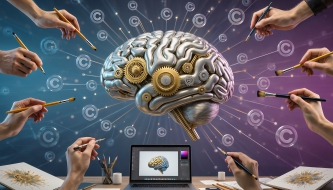
AI copyright has become one of the most important creative debates of the decade. As designers, writers, musicians, filmmakers, marketers, and brands use generative AI every day, one question keeps getting louder: who owns AI-generated creativity?
Is the owner the person who wrote the prompt? The company that built the AI model? The artist whose work may have been used in training data? Or does no one fully own the final result if the work was created mostly by a machine?
The answer is not simple. Copyright laws were built around human authors, not tools that can generate images, music, videos, logos, illustrations, scripts, and design concepts in seconds. Because of that, AI-generated work sits in a legal and ethical gray area that affects every creative professional.
This DesignRise guide explains the growing debate around AI-generated creativity, copyright ownership, training data, commercial use, human authorship, and what designers should do to protect their work in 2026.
This article is for general creative and educational purposes only. It is not legal advice. Copyright rules vary by country and can change quickly, so always consult a qualified legal professional for specific projects.
You May Also Like:
- Best AI Mockup Tools & Generators for Designers
- The Best AI Art Generators & Tools for 2026
- Meet Nano Banana Pro — A New AI Creative Tool on Artlist AI
The Short Answer: AI Ownership Depends on Human Contribution
The most practical answer is this: pure AI output may not receive the same copyright protection as human-made creative work. In many copyright systems, protection usually depends on meaningful human authorship.
That means a simple prompt like “create a futuristic poster” may not be enough to prove strong creative ownership. But if a designer develops the concept, writes detailed prompts, selects outputs, edits the composition, changes colors, adds typography, combines elements, and makes clear creative decisions, the human contribution becomes much stronger.
In other words, the more a human shapes the final result, the stronger the argument that the final work includes protectable human creativity.
| Creative Situation | Copyright Risk Level | Why It Matters |
|---|---|---|
| One-click AI generation with no editing | Higher uncertainty | Human authorship may be too limited |
| Prompt-based image with small edits | Still uncertain | Some human input exists, but it may be weak |
| AI image heavily edited by a designer | Stronger position | Human choices are clearer |
| AI used only for inspiration | Lower risk | The final work is created by a human |
| AI output similar to an existing artwork | Higher risk | Possible infringement or style conflict |
The key question is not only “Was AI used?” The better question is: how much human creativity shaped the final work?
Why Copyright Matters in the Age of AI Creative Work

Copyright matters because creative work has value. A logo, illustration, video, song, campaign image, book cover, or brand concept can be sold, licensed, reused, modified, and protected. When AI enters the creative process, ownership becomes harder to define.
Designers now use AI for:
- AI image generation and concept art.
- Photo editing, retouching, and background replacement.
- Video creation, animation, and storyboarding.
- Branding ideas, mood boards, and style exploration.
- Music, voice, and sound design.
- Copywriting, scripts, captions, and campaign concepts.
- Product visuals, packaging, and mockups.
For freelancers and agencies, the copyright issue is not abstract. It affects client contracts, commercial usage, licensing, portfolio rights, resale, advertising, and brand safety.
If a client asks, “Can we legally use this AI-generated image in an ad campaign?” the designer needs a responsible answer. That is why understanding AI copyright rules is becoming a basic professional skill.
The Three Big Questions Behind AI Copyright
The copyright debate around AI-generated creativity usually comes down to three major questions. Each one affects designers, artists, brands, and AI companies differently.
1. Who Owns the AI Output?
This is the question most users ask first. If you type a prompt and the AI creates an image, do you own that image?
The answer depends on the tool’s terms, the country, and the level of human authorship. Some platforms may give users commercial usage rights under their terms of service. But platform rights are not always the same as copyright protection under the law.
A safer approach is to treat raw AI output as a starting point, not the final professional asset. Add your own creative decisions, editing, design system, typography, composition, and brand direction.
2. Was the AI Trained on Copyrighted Work?
Generative AI systems are trained on large datasets. These datasets may include images, text, music, videos, code, and artworks collected from different sources. This raises a serious question: did the original creators give permission?
Many artists argue that AI companies should not train models on creative work without consent, licensing, or compensation. AI companies often argue that training is transformative and that models learn patterns rather than copying individual works.
This disagreement is one of the biggest reasons the AI copyright debate has become so intense.
3. Can AI Output Infringe Someone Else’s Work?
Even if an AI-generated image is new, it can still create legal problems if it is too similar to an existing copyrighted work, character, logo, illustration, photo, or brand asset.
For designers, this means AI output still needs review. Before using AI-generated content commercially, check whether it looks too close to an existing brand, artist, character, product, or copyrighted image.
How AI Training Data Creates Legal and Ethical Tension
One of the most emotional parts of the debate is AI training data. Generative AI models learn by analyzing large amounts of content. That content may include creative works made by artists, photographers, writers, musicians, designers, and filmmakers.
Creators are asking fair questions:
- Was my work used to train an AI model?
- Did I give permission?
- Can I opt out?
- Should I be paid if my work helped train a commercial AI product?
- Should AI companies disclose what datasets they used?
AI companies also have their own arguments. They say that models learn patterns and relationships, not exact copies. They also argue that generative AI can support innovation, productivity, accessibility, and new creative workflows.
The problem is that both sides have real concerns. Artists want fair treatment and control over their work. AI companies want legal clarity and room to innovate. Users want to know whether they can safely use AI-generated content in commercial projects.
Who Should Get Paid for AI-Generated Creativity?
Money is at the center of the copyright debate. If AI-generated work becomes valuable, someone will benefit financially. The question is who should receive that value.
Artists and Original Creators
Artists argue that if their work helped train a model, they should have more control. Many want attribution, licensing, compensation, opt-out systems, or revenue sharing.
From their perspective, AI companies should not build profitable tools from creative labor without permission.
AI Companies
AI companies argue that training does not always equal copying. They often describe AI training as a technical learning process that analyzes patterns at scale.
From their perspective, strict licensing rules could make AI development much harder, more expensive, or less competitive.
Users, Designers and Brands
Designers and brands are often caught in the middle. They want to use AI tools efficiently, but they also need to avoid legal and reputational risk.
For creative professionals, the biggest practical questions are:
- Can I sell AI-generated artwork?
- Can I use AI-generated images in client work?
- Can a brand use AI content in advertising?
- Can I copyright a design that includes AI-generated elements?
- What should I disclose to clients?
Until laws become clearer, designers should work carefully and keep documentation.
What Current Guidance Suggests for Designers
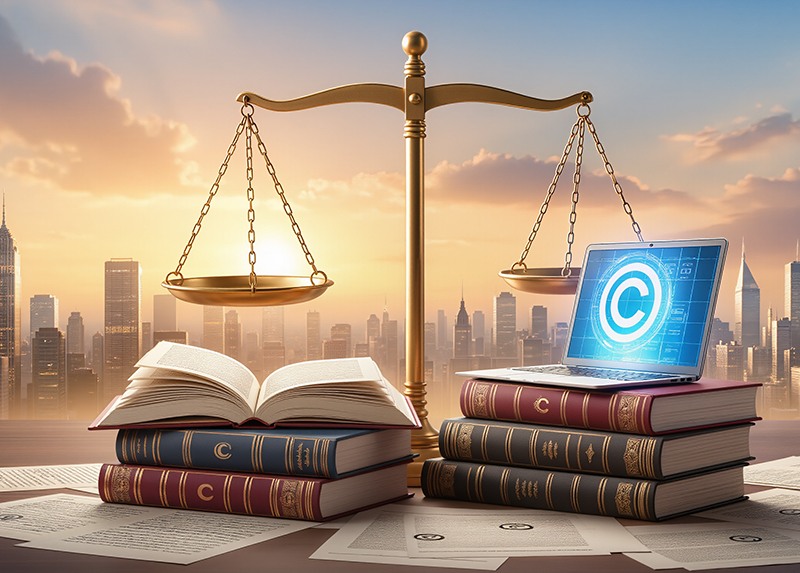
Legal rules are still developing, but several practical themes are becoming clear.
Human Authorship Matters
The strongest copyright protection usually comes from human creative expression. If a person makes meaningful creative choices, those choices may be easier to protect than raw AI output.
Prompts Alone May Not Be Enough
A short prompt may show intention, but it may not prove enough authorship. A detailed workflow with selection, editing, arrangement, and original design work creates a stronger human role.
Commercial Use Requires Extra Care
If AI content is used in ads, packaging, branding, merchandise, book covers, music, films, or paid client work, the risk is higher. Always check platform terms and consider legal review for important projects.
Transparency Is Becoming More Important
Governments, brands, publishers, and clients increasingly care about whether AI was used and whether the content was created responsibly. Disclosure may become a normal part of professional creative workflows.
What Designers Should Do Before Using AI Work Commercially
Designers do not need to avoid AI completely. But they should build safer habits. A responsible AI creative workflow protects both the designer and the client.
1. Use AI as a Creative Assistant, Not the Sole Author
Use AI for research, inspiration, rough concepts, mood boards, variations, and early visual directions. Then add your own design thinking, editing, typography, layout, composition, and brand strategy.
2. Document Your Process
Save prompts, screenshots, drafts, edits, source files, and notes. If questions arise later, you can show how much human work shaped the final asset.
3. Check the Tool’s Terms
Every AI platform has its own rules. Some tools allow commercial usage. Others may limit rights depending on your plan, content type, or jurisdiction. Always read the current terms before using output for client work.
4. Avoid Direct Artist Imitation
Do not ask AI to copy a living artist, specific designer, recognizable brand, famous character, or copyrighted style for commercial work. This can create ethical and legal problems.
5. Edit and Transform the Output
Add original creative work. Combine AI output with your own sketches, photos, layouts, typography, color systems, and composition decisions. The more meaningful your contribution, the stronger your creative position.
6. Be Transparent With Clients
If AI is a major part of the workflow, tell the client. Include clear language in contracts about AI usage, licensing, ownership, and responsibility.
7. Use Licensed or Ethical AI Tools When Possible
Some platforms are moving toward cleaner datasets, licensed content, creator compensation, and transparent training practices. These tools may become more important for professional work.
AI Copyright Risk Checklist for Creative Projects
Before using AI-generated content in a serious project, ask these questions:
- Did I make meaningful human creative decisions?
- Did I save the prompt, drafts, edits, and final files?
- Does the output look similar to an existing artwork, logo, character, or brand?
- Does the AI tool allow commercial use under my plan?
- Can I explain how the final work was created?
- Did I avoid copying a specific artist or copyrighted style?
- Does the client know AI was used?
- Should this project be reviewed by a legal professional?
This checklist does not remove all risk, but it helps designers work more responsibly.
The Future of AI Copyright: Toward Shared Creative Rights

The future of AI and copyright is not only about stopping misuse. It is about building a fair system where technology and human creators can work together.
The next stage of AI-generated creativity may include:
- More transparent datasets so creators know how models are trained.
- Opt-in and opt-out systems for artists and rights holders.
- Licensed training data for professional AI tools.
- Royalty models for creators whose work contributes to AI systems.
- Clearer copyright rules for human-AI collaborations.
- AI disclosure labels for commercial and editorial content.
- Better client contracts for AI-assisted creative work.
The copyright conversation is not going away. As AI tools become more powerful, creative rights will become even more important.
Why AI Copyright Is Becoming a Serious Issue for Creators
AI copyright is no longer only a legal topic for lawyers. It has become a practical issue for designers, artists, marketers, agencies, and brands that use AI-generated content in commercial projects.
Understanding AI copyright helps creative professionals know when AI output can be used safely, when human editing is important, and when a project may need extra legal review.
As more companies use generative tools for branding, advertising, images, videos, and product visuals, AI copyright will become an essential part of every modern creative workflow.
Useful Official Resources About AI Copyright
If you want to follow the legal discussion more closely, these official resources are useful starting points:
- U.S. Copyright Office: Copyright and Artificial Intelligence
- EU Artificial Intelligence Act Overview
- UK Government: Copyright and Artificial Intelligence
FAQ: AI Copyright and AI-Generated Creativity
Who owns AI-generated artwork?
Ownership depends on the country, the AI tool’s terms, and the level of human creative contribution. Pure AI output may have limited copyright protection, while heavily edited or human-directed work may have a stronger claim.
Can AI-generated images be copyrighted?
In many legal systems, copyright protection usually requires human authorship. AI-generated images may be harder to protect if they are created with minimal human input. Human editing, arrangement, and creative direction can matter.
Can designers sell AI-generated work?
Designers may be able to sell AI-generated work depending on the platform’s terms and local law. However, commercial use should be handled carefully, especially for branding, advertising, merchandise, and client projects.
Is it legal to train AI on copyrighted work?
This is one of the biggest unresolved questions in AI law. Different countries and courts may treat AI training differently. Some argue it can be allowed under certain exceptions, while creators argue that training should require permission or licensing.
Should designers tell clients when AI was used?
Yes, transparency is usually the safer professional approach. If AI was meaningfully used in a project, designers should explain how it was used and clarify usage rights in the contract.
How can designers reduce copyright risk when using AI?
Designers can reduce risk by using AI as a support tool, adding meaningful human creativity, documenting the workflow, checking platform terms, avoiding direct imitation, and using licensed or transparent AI tools when possible.
Conclusion: AI Creativity Needs Human Direction and Clearer Rights
The debate around AI copyright is still developing, but one thing is clear: human creativity remains central.
AI can generate images, videos, music, text, and design concepts at incredible speed. But creativity is not only output. It is intention, judgment, emotion, context, taste, storytelling, and responsibility. Those are still human strengths.
For designers, the smartest approach is not to fear AI or use it carelessly. The best approach is to use AI thoughtfully, document your process, respect original creators, understand licensing, and add enough human creative value to make the final work truly yours.
AI may change how creative work is made, but designers still shape what creative work means.
Explore more AI design tools, creative ethics, and future-focused design guides on DesignRise.
“`
Discover more from DesignRise
Subscribe to get the latest posts sent to your email.