


A corporate identity is not just a logo on a business card. It is the way a company introduces itself before anyone speaks to a salesperson, opens a presentation, visits a website, reads an email, or sees a product for the first time.
Good identity design creates recognition. Great identity design creates trust.
For years, building a full corporate identity meant slow research, moodboards, sketches, logo concepts, color studies, typography testing, brand guidelines, mockups, templates, and many rounds of revision. That process still matters. But now, artificial intelligence is changing how designers move through it.
AI corporate identity design is not about asking a tool to create a quick logo and calling it a brand. It is about using AI to explore strategic directions faster, compare visual systems, generate early identity concepts, test messaging, create brand assets, and maintain consistency across many platforms.
The strongest results still come from designers. AI can generate options, but a designer understands meaning. AI can suggest colors, but a designer knows whether they feel right for the brand. AI can produce mockups, but a designer decides whether the identity is memorable, scalable, and emotionally believable.
In this DesignRise guide, we’ll explore how AI is transforming corporate identity design — from logo exploration and color systems to brand strategy, visual assets, brand kits, consistency, and the future role of designers.
The New Era of Branding: From Static Identity to Adaptive Systems
Corporate identity used to be more static. A company would create a logo, define a few colors, choose fonts, prepare stationery, and build a brand guide. That system worked when brands communicated through fewer channels.
Today, identity has to live everywhere:
- websites;
- mobile apps;
- social media;
- email campaigns;
- pitch decks;
- digital ads;
- packaging;
- video content;
- AI-generated visuals;
- internal documents;
- product interfaces;
- customer support materials.
This means a modern corporate identity needs more than a logo. It needs a flexible visual and verbal system that can adapt without losing recognition.
AI helps because it can generate variations, test combinations, organize brand rules, create draft assets, and support consistency across many formats. But the brand still needs a clear idea at the center.
Explore More DesignRise Resources:
- Best AI Mockup Tools & Generators for Designers
- Personalized Email Design: Ultimate Guide to Boost Engagement and Conversions
- Fresh Collection of Free Fonts for Your Next Design Project
- AI-Generated Design Systems: The Creative Power Behind Smarter Design Workflows
What AI Corporate Identity Design Actually Means
AI corporate identity design means using artificial intelligence to support the creation, refinement, organization, and scaling of a company’s visual and verbal brand system.
It can include:
- logo concept exploration;
- color palette generation;
- typography pairing;
- brand voice and messaging drafts;
- visual style exploration;
- AI-generated brand illustrations;
- social media template ideas;
- presentation and stationery mockups;
- brand guideline drafts;
- asset organization;
- consistency checks across materials.
The keyword here is support. AI can support identity design, but it should not replace the thinking behind identity design.
Traditional Corporate Identity vs AI-Assisted Corporate Identity
| Traditional Identity Process | AI-Assisted Identity Process |
|---|---|
| Manual moodboard research | AI helps generate and compare visual territories |
| Logo sketches from scratch | AI creates early logo directions for refinement |
| Manual color exploration | AI suggests palettes based on mood, industry, and audience |
| Brand voice written manually | AI drafts tone options and messaging structures |
| Templates built one by one | AI helps scale brand assets into multiple formats |
| Brand consistency checked manually | AI can support consistency reviews and asset management |
The AI-assisted process is not less creative. When used well, it gives designers more time for strategy, selection, refinement, and storytelling.
Start With Brand Strategy Before Generating Anything
The biggest mistake in AI branding is starting with visuals too early. A logo generator can create hundreds of marks, but without strategy, those marks may not mean anything.
Before using AI for corporate identity design, define the brand foundation.
Questions to Answer First
- What does the company do?
- Who is the target audience?
- What should people feel when they see the brand?
- What problem does the company solve?
- What makes the company different?
- Should the identity feel premium, friendly, bold, technical, calm, playful, serious, or innovative?
- What competitors should the brand avoid looking like?
- What visual clichés should be avoided?
These answers help AI produce more useful results. Without them, AI will usually generate generic branding.
Brand Strategy Prompt
Act as a senior brand strategist. I am creating a corporate identity for [company type]. The audience is [audience]. The brand should feel [mood and personality]. Analyze the positioning, suggest three possible brand directions, define tone of voice, and list visual styles to explore and avoid.
This kind of prompt gives AI a strategic role instead of treating it like a logo vending machine.
1. AI Logo Design: A Faster Starting Point, Not the Final Brand
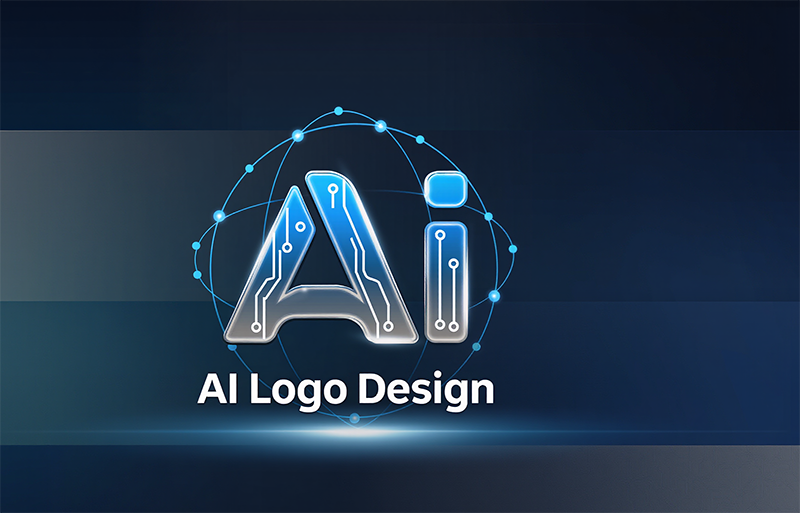
The logo is often the most visible part of corporate identity, so it is no surprise that AI logo tools are popular. Platforms such as Looka, Hatchful by Shopify, and Brandmark can generate logo concepts quickly based on a company name, industry, keywords, and style preferences.
This can be useful during early exploration. AI logo generators can help designers test directions, compare symbols, see unexpected combinations, and quickly visualize possible identity routes.
But a logo generated by AI should rarely be treated as the finished identity without refinement.
What Designers Should Refine
- symbol originality;
- proportions;
- spacing;
- letterforms;
- legibility at small sizes;
- brand meaning;
- color usage;
- scalability across formats;
- similarity to existing logos;
- black-and-white performance.
A strong logo is not only attractive. It must be memorable, usable, ownable, and connected to the brand story.
Logo Exploration Prompt
Generate five logo concept directions for a [company type] brand that should feel [brand personality]. For each direction, describe the symbol idea, typography style, emotional tone, possible color direction, and what could make the logo feel generic.
2. Color Palettes and Typography Become More Strategic
Color and typography shape how a corporate identity feels before people read a single word. A deep navy can feel stable and corporate. A soft green can feel calm and wellness-focused. A bright orange can feel energetic and approachable. A refined serif can feel editorial or premium. A geometric sans-serif can feel modern and digital.
AI can help designers explore these decisions faster.
Tools such as Khroma, Colormind, and FontJoy can support palette and font exploration.
How AI Helps With Color
- generates palette variations based on mood;
- suggests complementary or contrasting color combinations;
- helps test different brand personalities;
- creates options for light and dark modes;
- supports campaign or seasonal palette exploration;
- suggests functional colors for UI systems.
How AI Helps With Typography
- suggests font pairings;
- explores personality through type choices;
- creates hierarchy suggestions;
- helps compare modern, classic, playful, technical, or editorial styles;
- supports early brand guide structure.
Designers still need to check readability, accessibility, licensing, cultural fit, and whether the typography supports the company’s positioning.
3. AI Helps Connect Brand Strategy and Messaging

Corporate identity is not only visual. A brand also has a voice. It speaks through headlines, taglines, email copy, social captions, website sections, product messages, presentations, and customer support language.
AI can help designers and brand teams connect the visual identity with verbal identity.
Tools such as ChatGPT and Copy.ai can support early messaging exploration, tone of voice development, and brand positioning drafts.
AI Can Help Draft
- mission statements;
- vision statements;
- tagline options;
- brand values;
- tone of voice rules;
- website hero copy;
- social media bio options;
- email signature language;
- brand story directions;
- messaging do and don’t examples.
Example: Turning Brand Personality Into Voice
If a company wants to sound “innovative but trustworthy,” AI can generate several tone directions:
- Clear and expert: confident but not cold.
- Warm and practical: helpful, human, and easy to understand.
- Bold and visionary: energetic, future-focused, and ambitious.
- Calm and premium: refined, minimal, and reassuring.
The designer or strategist then chooses the tone that fits the brand best.
4. Generative AI Creates Custom Visual Worlds

Many brands rely too heavily on stock visuals. The problem is that stock images can make different companies look the same. Generative AI gives designers another option: creating custom visual worlds that feel more specific to the brand.
Tools such as Midjourney, OpenAI, and Adobe Firefly can support visual exploration for campaigns, brand illustrations, social media imagery, packaging concepts, and website hero images.
What AI Can Generate for Corporate Identity
- abstract brand backgrounds;
- custom illustration directions;
- campaign visuals;
- social media image styles;
- presentation graphics;
- pattern systems;
- product moodboards;
- hero image concepts;
- visual metaphors for brand ideas.
The key is consistency. If every AI image looks different, the brand becomes weaker. Designers should define prompts, visual rules, color treatments, composition styles, and image usage guidelines.
Visual Style Prompt
Create a visual identity direction for a corporate technology brand. The style should feel intelligent, trustworthy, and human. Use abstract data-inspired shapes, soft depth, clean composition, restrained blue and silver palette, and avoid cliché futuristic neon visuals.
5. AI Helps Build Complete Brand Kits Faster
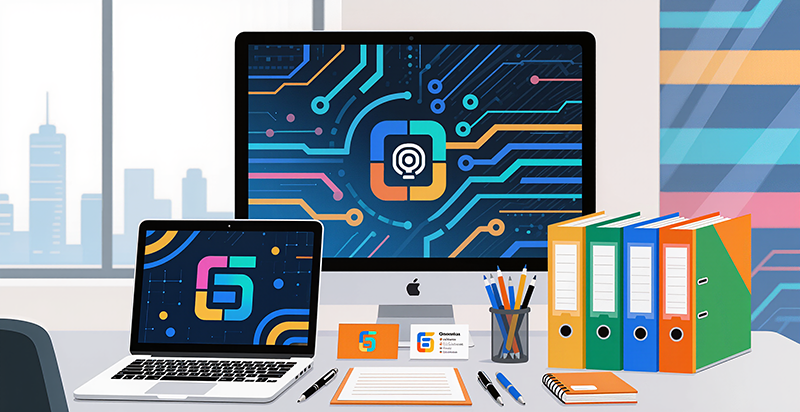
A corporate identity is not complete when the logo is finished. A real brand needs practical assets that can be used by the team.
AI-powered branding platforms such as BrandCrowd and Brandmark can quickly generate brand kit materials, including logo versions, stationery, social banners, presentation templates, and basic visual assets.
For small businesses, this can be a useful starting point. For designers, it can speed up early visualization and help clients understand how an identity might work across formats.
What a Corporate Brand Kit Should Include
- primary logo;
- secondary logo;
- logo icon or mark;
- black-and-white versions;
- color palette;
- typography system;
- business card design;
- letterhead;
- social media templates;
- presentation template;
- email signature;
- brand imagery direction;
- basic usage rules.
AI can generate drafts, but designers should refine the system so it feels coherent and not like a collection of templates.
6. AI Supports Brand Consistency and Asset Management
After a corporate identity is created, the hardest part is often consistency. Different teams create presentations, social posts, ads, internal documents, and email graphics. Over time, the brand can start to drift.
AI can help teams manage brand assets, organize templates, detect inconsistencies, and scale content more efficiently.
Platforms such as Frontify and Canva Brand Hub can help teams manage logos, fonts, templates, and brand assets in one place.
Where AI Can Help With Consistency
- checking if templates follow brand colors;
- suggesting approved fonts and layouts;
- organizing logo files and brand assets;
- creating consistent social media variations;
- adapting brand visuals across formats;
- drafting brand guideline documentation;
- helping non-design teams stay on brand.
For corporate teams, this is one of the most practical uses of AI: not just creating the identity, but helping maintain it over time.
The Designer’s Role Is Becoming More Strategic
AI is changing corporate identity design, but not by removing designers. It is changing what designers spend their time on.
Instead of spending hours only on first drafts, designers can spend more time on:
- brand positioning;
- creative direction;
- client discovery;
- audience research;
- identity refinement;
- system thinking;
- storytelling;
- brand consistency;
- quality control;
- guideline documentation.
This makes the designer’s role more strategic. The designer becomes less of a person who only “makes assets” and more of a person who builds a brand system.
Practical Workflow: How to Use AI in Corporate Identity Design
Here is a practical workflow designers can follow when using AI for corporate identity projects.
Step 1: Discovery and Brand Foundation
Use AI to organize client answers, summarize competitor research, and generate positioning questions. Do not skip the real discovery conversation.
Step 2: Visual Territory Exploration
Ask AI to suggest several brand directions. Compare mood, colors, typography, imagery, and tone before choosing one.
Step 3: Logo and Symbol Concepts
Use AI logo tools or prompt-based generation for early ideas. Refine manually for originality, proportion, and brand meaning.
Step 4: Color and Type System
Generate palette and typography options. Check contrast, readability, licensing, and long-term usability.
Step 5: Messaging and Tone of Voice
Use AI to draft brand voice options, taglines, and messaging examples. Edit everything so it sounds specific and human.
Step 6: Brand Kit and Templates
Create practical assets such as business cards, pitch decks, social posts, email signatures, and stationery. Use AI for speed, but keep the system consistent.
Step 7: Brand Guidelines
Use AI to draft documentation, then refine it with clear examples, rules, and do/don’t sections.
Common Mistakes in AI Corporate Identity Design
Starting With Logo Generation Too Early
A logo without strategy is decoration. Define the brand personality and positioning before generating visuals.
Accepting Generic AI Results
AI can produce polished but predictable branding. Designers should remove clichés and make the identity more specific.
Ignoring Originality
AI tools can generate similar-looking symbols or styles. Always check whether the identity feels unique enough for the brand.
Creating a Brand Kit Without Rules
A set of templates is not a brand system. Corporate identity needs clear usage rules, not just files.
Forgetting Accessibility
Color palettes and typography should be readable and accessible across digital platforms.
Letting Every AI Asset Look Different
Generative visuals can easily drift in style. Define image rules, prompt templates, and visual guidelines to keep consistency.
AI Corporate Identity Design Checklist
Use this checklist before presenting an AI-assisted corporate identity to a client or team:
- Is the brand strategy clearly defined?
- Does the identity match the target audience?
- Does the logo work in small sizes?
- Are logo variations prepared?
- Are colors assigned clear roles?
- Has color contrast been checked?
- Is typography readable and appropriate?
- Does the visual style feel unique?
- Does the tone of voice match the visuals?
- Are brand assets consistent across formats?
- Are AI-generated visuals aligned with the brand?
- Are usage rules documented?
- Has the final identity been refined by a designer?
Useful AI Branding Resources
If you want to explore AI corporate identity design further, these tools and resources can support different parts of the branding workflow:
- Looka — AI logo and brand identity exploration.
- Brandmark — AI logo and brand kit concepts.
- Khroma — AI-assisted color palette exploration.
- FontJoy — font pairing suggestions.
- Adobe Firefly — generative AI for creative assets.
- Frontify — brand management and asset organization.
- Canva Brand Hub — brand templates and visual consistency.
FAQ: AI Corporate Identity Design
What is AI corporate identity design?
AI corporate identity design is the use of artificial intelligence to support the creation and management of a company’s visual and verbal brand system, including logos, colors, typography, messaging, templates, and brand assets.
Can AI create a full corporate identity?
AI can help generate early concepts, brand kits, visual directions, and messaging drafts. However, designers still need to refine the identity, check originality, build rules, and make sure the brand feels strategic and human.
Does AI replace brand designers?
No. AI can speed up repetitive tasks and exploration, but brand designers still lead strategy, creative direction, storytelling, emotional impact, and final quality control.
How can AI help with logo design?
AI logo tools can generate many logo concepts quickly. Designers can use these as starting points, then refine the strongest ideas for originality, scalability, meaning, and professional use.
Can AI help with brand voice?
Yes. AI can draft mission statements, taglines, tone of voice rules, website copy, and messaging examples. Human editing is needed to make the voice specific and authentic.
How do designers keep AI branding from looking generic?
Designers can avoid generic results by starting with strong brand strategy, defining audience and personality, using specific prompts, refining AI outputs manually, and documenting clear brand rules.
Is AI useful for brand consistency?
Yes. AI can help manage templates, suggest on-brand assets, organize brand materials, and support consistency across social media, presentations, ads, websites, and internal documents.
What should be included in an AI-assisted brand kit?
An AI-assisted brand kit should include logo variations, color palette, typography, social templates, stationery, presentation templates, email signature, imagery direction, and usage guidelines.
Conclusion: Human Creativity Plus AI Efficiency
AI is transforming corporate identity design by making exploration faster, brand kits easier to build, visual systems more flexible, and consistency easier to manage.
But the future of branding is not automatic. A strong corporate identity still needs human creativity, strategy, taste, empathy, and storytelling.
AI can help generate the first ideas. Designers decide which ideas deserve to become part of the brand. AI can produce visual options. Designers turn them into meaning. AI can scale assets. Designers protect consistency and emotion.
The best corporate identities will not be created by AI alone. They will be created by designers who know how to use AI intelligently while keeping the brand’s purpose, personality, and audience at the center.
AI can speed up the branding process. Designers still create the identity people remember.
Explore more branding, AI design, and creative workflow resources on DesignRise.
Discover more from DesignRise
Subscribe to get the latest posts sent to your email.