


There is a moment in almost every design project when the screen is full of options, but the direction still feels unclear. You have a few references, a half-written brief, maybe some AI-generated visuals, a rough layout in Figma, and a client expecting something “fresh,” “premium,” or “more modern.”
That is exactly where many designers get stuck. Not because they lack creativity, but because they are trying to make too many decisions alone.
In 2026, more designers are using AI not only as a generator, but as a kind of creative reviewer — almost like an AI art director. Not because AI should replace a real art director or designer, but because it can help ask better questions, explore directions faster, challenge weak ideas, and keep the creative process moving.
The key is knowing how to direct AI before AI starts directing the project for you.
This DesignRise guide shows how to use an AI art director workflow in a practical, human way. You’ll learn how to define creative intent, explore visual territories, curate results, build real design work, use AI for critique, and create a repeatable system for modern design projects.
Why Designers Are Treating AI Like an Art Director
A traditional art director does more than choose pretty images. A good art director protects the idea. They keep the project aligned with the brief, audience, brand, emotion, composition, and final outcome.
AI can now support some of that thinking. It can help designers test visual directions, compare creative routes, rewrite unclear copy, generate moodboard language, review hierarchy, and point out possible weak spots.
But here is the important distinction:
- AI can suggest direction.
- AI can challenge your thinking.
- AI can help you see alternatives.
- AI can speed up exploration.
- AI cannot replace your taste, judgment, or responsibility.
That is why using AI as an art director works best when the designer stays in control. AI becomes a creative mirror, not the final decision-maker.
Explore More DesignRise Resources:
- From Idea to Final Design: A Complete AI Workflow Designers Use in 2026
- The AI Workflow Stack Every Modern Designer Uses in 2026
- The AI Design Workflow Blueprint: How Top Designers Work Faster and Smarter in 2026
- How Designers Actually Use AI in Their Workflow in 2026: Real Examples
What Does “AI as Your Art Director” Actually Mean?
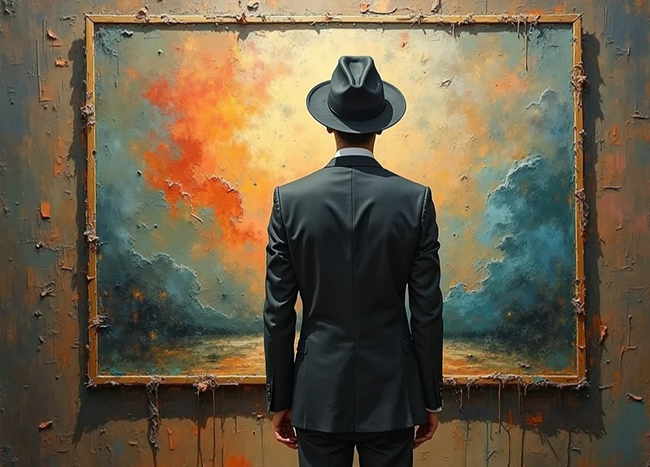
Using AI as your art director does not mean asking AI to “make something cool.” That usually leads to generic results. The better approach is to use AI as a structured creative partner that helps you ask sharper questions.
Instead of:
Generate a modern design.
Ask:
Help me explore three possible creative directions for this project, compare their emotional tone, explain where each direction works best, and point out what could make them feel generic.
That is a very different kind of interaction. You are not asking AI to finish the design. You are asking it to help you think.
AI as a Generator vs AI as an Art Director
| AI as a Generator | AI as an Art Director |
|---|---|
| Creates random outputs | Helps evaluate direction |
| Focuses on visuals first | Starts with intent and strategy |
| Produces many options | Helps compare and filter options |
| Can feel generic | Supports stronger creative judgment |
| Works like a tool | Works like a creative review partner |
A professional AI art director workflow is not about generating more. It is about making better creative decisions from what you generate.
The Creative Room Method: A Less Robotic AI Workflow
Instead of thinking about this process as a boring checklist, imagine your project moving through several creative rooms. Each room has a different purpose. In one room, you clarify the idea. In another, you explore style. In another, you review what feels weak. In the final room, you polish the design.
This makes the workflow feel more natural and closer to how real creative work happens.
The rooms are:
- The Briefing Room: define the idea before using tools.
- The Reference Wall: explore visual language and mood.
- The Direction Table: compare ideas like an art director.
- The Studio Desk: build the real design in professional tools.
- The Critique Room: use AI for feedback and blind spots.
- The Style Library: turn good decisions into reusable systems.
This structure keeps the article and workflow more human. Design is rarely a straight line. It is a loop of direction, exploration, judgment, production, and refinement.
The Briefing Room: Define Creative Intent Before Prompting
The first mistake many designers make is opening AI before they know what they are trying to create. They start with prompts instead of strategy. Then they wonder why the outputs feel random.
Before using an AI art director, define the creative intent. This gives AI a meaningful role in the project.
Questions to Answer First
- What is the project goal?
- Who is the audience?
- What should the design make people feel?
- What business outcome does the design support?
- What visual territory are we exploring?
- What should the design avoid?
- What would make this project feel generic?
These questions may feel simple, but they change the quality of every AI response that comes after.
A 5-Sentence Creative Brief Template
Use this before asking AI for visual ideas:
This project is for [audience]. The goal is to [main outcome]. The design should feel [emotion/style]. The brand should avoid [things to avoid]. The final result should help users/client understand [main message].
Example Brief
This project is for independent wellness coaches who sell online programs. The goal is to create a landing page that builds trust and encourages visitors to book a discovery call. The design should feel calm, personal, premium, and warm. The brand should avoid looking too medical, too corporate, or too generic. The final result should make visitors feel that coaching is approachable and professional.
This is the kind of input that makes AI useful. The clearer the brief, the better the creative conversation.
The Reference Wall: Use AI to Explore Visual Territories
Once the intent is clear, AI can help you explore possible visual territories. This is where AI becomes useful for art direction because it can quickly generate multiple interpretations of the same brief.
At this stage, the goal is not to produce final visuals. The goal is to understand the range of possible directions.
Ask for Creative Territories, Not Finished Designs
A creative territory is a possible world for the project. It includes mood, style, color, typography, imagery, layout rhythm, and emotional tone.
For the wellness coaching example, AI might suggest:
- Soft Editorial Calm: warm neutrals, magazine-style typography, gentle photography, lots of white space.
- Modern Personal Brand: clean layout, friendly portraits, clear service sections, approachable tone.
- Premium Wellness Studio: muted greens, elegant serif typography, refined spacing, soft lifestyle imagery.
- Trust-First Coaching: testimonials, process clarity, simple UI patterns, grounded copy.
- Digital Mentor: light tech cues, structured program visuals, subtle AI or planning elements.
These are not final answers. They are starting points for comparison.
Prompt for Visual Territories
Act as an art director. Based on this creative brief, generate five distinct visual territories. For each one, include emotional tone, color direction, typography mood, imagery style, layout rhythm, and what type of audience it would appeal to. Also explain what could make each direction feel generic.
This kind of prompt gives AI a more useful role. It does not only generate. It compares.
The Direction Table: Curate Like a Real Art Director
This is the part where the designer becomes more important, not less.
AI can give you many options, but quantity is not the same as quality. A real art director knows what to remove. They know when something looks polished but says nothing. They know when a visual direction is beautiful but wrong for the brand.
Your job is to curate.
What to Look For When Reviewing AI Ideas
- Does this direction support the project goal?
- Does it fit the audience?
- Does it feel emotionally right?
- Can it work across multiple pages, posts, or assets?
- Does it feel specific or generic?
- Does it have a strong enough visual language?
- What should be removed?
- What should be combined?
The Keep / Cut / Combine Method
Use a simple three-column review system:
| Keep | Cut | Combine |
|---|---|---|
| Strong ideas, useful moods, good visual language | Generic elements, cliché styles, unclear concepts | Useful parts from different outputs that can become one stronger direction |
This method helps you avoid accepting the first output. It also keeps the project from becoming a collage of unrelated AI ideas.
Example Review
You might keep the warm photography from one direction, the typography mood from another, and the page structure from a third. Then you cut anything that feels too stock-photo, too decorative, or too similar to every other AI-generated wellness brand.
That is art direction. AI provides material. The designer shapes meaning.
The Studio Desk: Translate AI Ideas Into Real Design
At some point, you need to stop generating and start designing.
AI output is rarely final. Even when it looks impressive, it may have weak hierarchy, inconsistent spacing, poor accessibility, unclear content, fake UI logic, or visuals that do not translate into a real product.
This is where you move into professional design tools:
- Figma for UI, components, prototypes, and design systems.
- Photoshop for image editing and composition.
- Illustrator for vector refinement and identity work.
- Webflow or Framer for web execution.
- After Effects or motion tools for animation direction.
- Blender or 3D tools for product scenes and spatial concepts.
What the Designer Must Refine Manually
- Layout hierarchy.
- Spacing and alignment.
- Typography scale.
- Component consistency.
- Interaction logic.
- Accessibility.
- Responsive behavior.
- Brand rules.
- Image quality.
- Final polish.
An AI art director workflow does not end with AI output. It ends with a designer making the work usable, consistent, and client-ready.
The Critique Room: Use AI for Feedback, Not Approval
One of the most useful ways to use AI is as a feedback partner. Many designers use AI for ideation, but forget to use it for critique.
After you build a first version, ask AI to review the work from different angles. This can help catch blind spots before a client meeting or handoff.
Useful AI Critique Prompts
Act as a senior art director. Review this design direction based on the brief. What feels strong, what feels generic, and what should be refined before presenting it to a client?
Act as a UX reviewer. Look at this landing page structure and identify where users might feel confused, where the message could be clearer, and what section might need stronger proof.
Act as a brand strategist. Does this visual direction support a calm, premium, trustworthy wellness brand? What elements might weaken that perception?
The key is to use AI feedback as input, not final truth. AI can point out possible issues, but you decide what matters.
What AI Feedback Can Help With
- Clarity of hierarchy.
- Emotional tone.
- Brand consistency.
- Possible user confusion.
- Weak headlines.
- Missing proof points.
- Generic visual choices.
- Accessibility reminders.
This is why the “AI as art director” idea works. It gives you another lens, but not another boss.
The Style Library: Turn Good Decisions Into a Reusable System
The real power of AI workflows comes when you stop starting from zero every time.
If a prompt worked well, save it. If a creative direction gave you strong results, document it. If a critique checklist helped improve a project, reuse it. If a style description created consistent outputs, add it to your library.
What to Save in Your AI Art Direction Library
- Creative brief templates.
- Prompt structures.
- Brand tone instructions.
- Visual territory examples.
- Useful moodboard keywords.
- Negative prompts or things to avoid.
- Critique questions.
- Client presentation language.
- Style references.
- Final approved directions.
Over time, this becomes your personal art direction system. It helps you work faster without making every project feel the same.
Real Project Example: AI as an Art Director for a Brand Campaign
Let’s make this practical.
Imagine you are designing a campaign for a small skincare brand launching a new hydrating serum. The client says:
We want something premium, fresh, and elegant, but not too luxury or cold.
That is a real-world brief: useful, but still vague.
First, Clarify the Intent
You turn it into a clearer creative brief:
The campaign should present the serum as a daily hydration ritual for women aged 25–40. The visual tone should feel fresh, soft, clean, and quietly premium. It should avoid looking clinical, overly glamorous, or generic. The main goal is to make the product feel trustworthy and desirable for everyday use.
Then, Ask AI for Creative Territories
AI might suggest:
- Morning Skin Ritual: soft bathroom light, warm neutrals, calm routine feeling.
- Water-Light Freshness: translucent textures, light blue accents, reflective surfaces.
- Clean Beauty Editorial: minimal product photography, elegant typography, white space.
- Soft Science: gentle lab-inspired details, but warmer and less clinical.
- Everyday Glow: natural lifestyle photography, approachable copy, soft gradients.
Next, Curate the Direction
You might choose to combine Water-Light Freshness with Clean Beauty Editorial. You keep the soft reflective surfaces and elegant typography. You remove anything that feels too medical or too cold.
Then, Build the Campaign
You create the actual design system:
- hero product image;
- campaign headline;
- social media templates;
- landing page section;
- email banner;
- product benefit cards;
- short ad variations.
Finally, Use AI for Review
You ask AI to review whether the direction feels premium but not cold, fresh but not childish, and trustworthy without becoming clinical.
This is a very practical way to use an AI art director. AI helps you think through creative direction, but the designer creates the final system.
Where AI Helps Most in Art Direction
AI is especially useful when the project needs more thinking, comparison, or variation. It is less useful when you need final taste, subtle typography, or precise production judgment.
| Art Direction Task | How AI Helps | What the Designer Must Decide |
|---|---|---|
| Creative brief | Clarifies audience, tone, and project goals | What the project actually needs |
| Moodboard direction | Suggests visual territories and references | Which mood fits the brand |
| Concept exploration | Generates multiple routes quickly | Which concept is strongest |
| Copy direction | Creates headline and tone options | What sounds human and brand-right |
| Visual critique | Finds possible weak spots | Which feedback to accept |
| Consistency | Helps create style rules and checklists | How the system should be applied |
Common Mistakes Designers Make With AI Art Direction

Even experienced designers can misuse AI when they treat it as a shortcut instead of a creative partner.
Treating AI as the Final Decision-Maker
AI can suggest, compare, and critique. But the final decision should come from the designer’s understanding of the brief, audience, brand, and context.
Accepting the First Output
The first result is usually just a direction, not the answer. Strong work comes from selection, combination, and refinement.
Ignoring Brand Consistency
AI can drift visually if it does not have clear brand rules. Always define colors, tone, typography mood, imagery style, and what to avoid.
Overusing AI Aesthetics
AI-generated visuals can become obvious when they rely on the same glossy, overly polished, surreal, or generic styles. Use AI outputs as raw material, not as a finished identity.
Skipping Accessibility and UX Logic
Visual direction still needs usability. A beautiful concept can fail if the interface is hard to read, hard to navigate, or inaccessible.
Not Saving What Works
If a prompt, critique format, or style direction works, save it. Otherwise, you will repeat the same setup work every time.
Why This Workflow Matters for Designers in 2026
The design industry is changing quickly. Clients expect faster exploration, multiple creative directions, strategic thinking, and measurable impact. At the same time, they still expect originality, taste, and polish.
That combination creates pressure.
Designers who can guide AI effectively become more valuable because they can:
- move faster without sacrificing quality;
- explore broader creative territory;
- make smarter design decisions;
- present stronger creative reasoning;
- create more consistent visual systems;
- reduce repetitive work;
- spend more time on strategy and refinement.
AI is not reducing the role of designers. It is expanding the role of designers who know how to direct it.
Useful AI Art Direction Resources
To build a stronger AI art director workflow, it helps to combine AI tools with solid UX, accessibility, and creative thinking. These resources are useful starting points:
- Figma AI: AI features for design workflows
- Adobe Firefly: Generative AI for creative work
- Nielsen Norman Group: AI and UX resources
- W3C WCAG: Accessibility guidelines
- OpenAI: AI research and products
AI Art Director Checklist
Use this checklist before presenting a design direction or moving into final production:
- Is the creative intent clear?
- Does the design match the audience?
- Does the emotional tone fit the brief?
- Have you explored more than one direction?
- Have you removed generic AI-looking elements?
- Does the visual system feel consistent?
- Is the typography readable?
- Is the layout hierarchy clear?
- Are accessibility basics checked?
- Can the direction scale across formats?
- Have you saved useful prompts and style rules?
- Does the final decision come from you, not the AI?
Key Takeaways
- AI works best as a creative collaborator, not a replacement.
- Strategy comes before prompts.
- Curation is the designer’s superpower.
- Strong workflows create consistent results.
- Human taste remains the final differentiator.
- An AI art director workflow helps designers explore, compare, critique, and refine ideas faster.
FAQ: AI as Your Art Director
What does AI as your art director mean?
Using AI as your art director means using AI to help explore creative directions, compare ideas, review visual choices, challenge weak concepts, and support the design process while the designer keeps final control.
Can AI replace a real art director?
No. AI can support art direction tasks, but it cannot replace human taste, context, brand judgment, client understanding, cultural awareness, and final creative responsibility.
How can designers use AI for art direction?
Designers can use AI to define visual territories, generate moodboard ideas, compare creative routes, rewrite concept descriptions, review hierarchy, suggest critique questions, and document style rules.
What is the best way to start using AI as an art director?
Start with a clear creative brief. Define the audience, goal, emotion, brand tone, and things to avoid before asking AI for ideas.
Why do AI-generated designs often look generic?
AI-generated designs often look generic when the prompt is vague, the brand direction is unclear, or the designer accepts outputs without curation and refinement.
Is AI useful for brand design?
Yes. AI can help explore brand personalities, moodboards, visual territories, tagline directions, and campaign concepts. The final identity system should still be built and refined by a designer.
Is AI useful for UI/UX design?
Yes. AI can help review hierarchy, draft UX copy, generate onboarding ideas, summarize user pain points, and suggest accessibility checks. The final UX decisions still require human judgment.
What should designers save in an AI art direction library?
Designers should save creative brief templates, strong prompts, critique questions, visual style descriptions, approved direction notes, brand tone instructions, and useful moodboard keywords.
Conclusion: The New Creative Partnership
In 2026, the most successful designers do not fight AI and do not blindly follow it. They direct it.
AI can generate ideas, compare directions, suggest improvements, and help create a stronger workflow. But it cannot define vision on its own. That role still belongs to the designer.
When you treat AI as your art director, you gain faster ideation, clearer creative direction, sharper critique, and more confident design decisions. But the value comes from the relationship between human judgment and intelligent tools.
The future of design is not human versus AI. It is human creativity amplified by intelligent workflows.
AI can help you see more possibilities. You decide which possibility becomes design.
Explore more AI workflow guides, creative tools, and design resources on DesignRise.
Discover more from DesignRise
Subscribe to get the latest posts sent to your email.