



The way designers work has changed permanently. In 2026, the most successful designers are not simply working longer hours or collecting more tools. They are building smarter systems. They use a clear AI design workflow blueprint to move from idea to final delivery faster, with more control and less repetitive work.
But here is the problem: many designers still use AI randomly. They open a tool, type a quick prompt, generate a few results, and hope something useful appears. Sometimes it works. Most of the time, it creates generic ideas, inconsistent visuals, and more confusion than clarity.
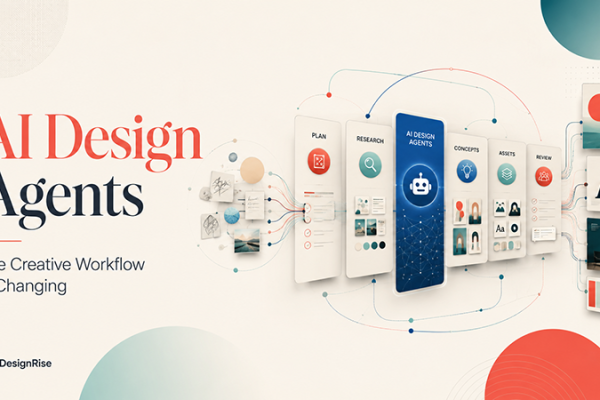
Top designers work differently. They treat AI as part of a structured workflow, not as a magic button. They define direction first, explore broadly, curate carefully, build in real design tools, use AI for feedback, and then polish the final experience with human judgment.
This advanced DesignRise guide breaks down the AI design workflow blueprint step by step. You’ll learn how designers use AI in real projects, how to avoid common mistakes, how to keep creative control, and how to create a repeatable system that helps you work faster and smarter in 2026.
The New Standard for Designers in 2026

In the past, designers were often judged by how well they could use individual tools. Figma, Photoshop, Illustrator, Webflow, After Effects, Framer, Canva, and other platforms all mattered. They still matter today. But in 2026, tool knowledge alone is no longer enough.
The new standard is workflow thinking.
Clients, teams, and creative studios now expect designers to:
- Explore more ideas before choosing a direction.
- Deliver faster without lowering quality.
- Use AI responsibly without losing originality.
- Create consistent systems across many assets and formats.
- Explain design decisions clearly to clients and teams.
- Adapt quickly when feedback changes the project direction.
This is why an AI design workflow blueprint matters. It gives designers a repeatable structure for using AI intentionally instead of randomly.
Explore More DesignRise Resources:
- How Designers Actually Use AI in Their Workflow in 2026: Real Examples
- The AI Workflow Stack Every Modern Designer Uses in 2026
- AI as Your Art Director: Step-by-Step Workflow for Modern Designers
- AI Workflows for Designers: Tools, Systems & Real Use Cases in 2026
What Is an AI Design Workflow Blueprint?
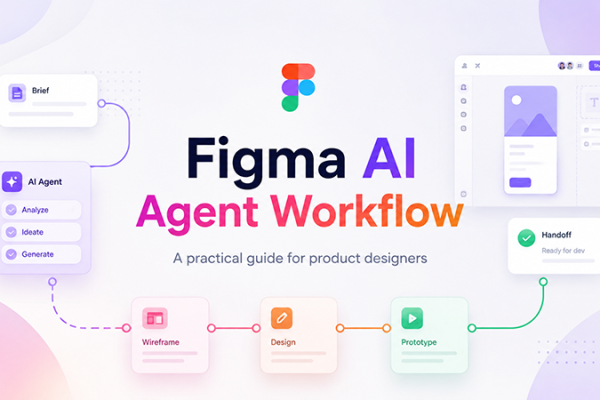
An AI design workflow blueprint is a structured system that shows when, where, and how to use AI during the design process. It is not just a list of AI tools. It is a repeatable method for moving from project brief to final delivery.
A strong blueprint helps designers:
- Define project direction before generating ideas.
- Use AI for exploration without losing strategy.
- Create more concepts in less time.
- Filter weak AI outputs quickly.
- Build final designs in professional tools.
- Use AI for feedback and refinement.
- Deliver polished, consistent work faster.
Think of it as your personal operating system for design. Instead of asking AI to “make something good,” you guide AI through a clear creative process.
AI Tool vs AI Workflow Blueprint
| AI Tool | AI Design Workflow Blueprint |
|---|---|
| A single app or platform | A complete system for using AI across the design process |
| Helps with one task | Connects research, ideation, production, feedback, and delivery |
| Can create random results | Creates more controlled and repeatable results |
| Focuses mostly on output | Focuses on decisions, structure, and quality |
| May become outdated | Can adapt as tools change |
The difference is simple: tools generate outputs, but workflows create results.
Why Traditional Design Workflows No Longer Work the Same Way
Traditional design workflows were usually linear. A designer would research, create one or two directions, refine the best option, present it, revise it, and deliver the final assets. That process still exists, but AI has changed the speed and scale of each stage.
Today, designers can generate multiple directions quickly, test more ideas, rewrite copy instantly, create visual references, adapt assets for different formats, and prepare documentation faster than before.
This creates a new challenge. More options can be helpful, but they can also become overwhelming. Without structure, AI can lead to:
- Too many unrelated ideas.
- Generic visual styles.
- Weak brand consistency.
- Messy creative direction.
- Random tool switching.
- More time spent sorting outputs than designing.
That is why designers need a blueprint. The goal is not to generate more for the sake of more. The goal is to generate better starting points and make stronger decisions faster.
The AI Design Workflow Blueprint: Step-by-Step System
Here is a practical AI design workflow blueprint that can be used for UI/UX design, branding, web design, product design, social media campaigns, presentation design, and creative direction.
Step 1: Define Direction Before Using AI
Before opening any AI tool, define the creative direction. This is the step many designers skip, and it is the main reason AI results often feel generic.
AI works best when it has context. If your brief is vague, your output will be vague. If your direction is clear, AI can help you explore faster and more precisely.
Start by answering:
- What is the goal of this project?
- Who is the target user or audience?
- What problem should the design solve?
- What feeling should the design create?
- What brand personality should the result communicate?
- What should the design avoid?
- What format or platform is this design for?
Rule: AI amplifies clarity. It does not fix confusion.
Real Example: Website Redesign
If you are designing a website for a premium skincare brand, do not start with a prompt like “create a beautiful website.” Start with direction:
- Audience: women aged 25–45 interested in clean beauty.
- Goal: increase trust and product discovery.
- Style: premium, soft, minimal, natural.
- Avoid: aggressive sales language, cluttered layouts, generic stock-photo mood.
- Deliverables: homepage, product page, mobile layout, social preview.
Now AI has a useful foundation. Your prompts will produce better concepts because the direction is already defined.
Step 2: Use AI for Rapid Exploration
After defining direction, use AI to explore possibilities. This stage is not about finding the final answer. It is about widening the creative field before you commit to one path.
Use AI to generate:
- Visual directions.
- Moodboard ideas.
- Layout variations.
- Color palette concepts.
- Typography directions.
- Campaign angles.
- UX flow ideas.
- Image prompt directions.
- Headline and CTA variations.
At this stage, quantity is useful. You are not trying to accept every result. You are looking for patterns, useful ideas, unexpected combinations, and strong creative opportunities.
Good AI Exploration Prompt
Act as a senior brand designer. I am designing a premium skincare website for women aged 25–45. The brand should feel calm, natural, trustworthy, and modern. Generate five distinct visual directions with color palette ideas, typography style, photography mood, layout personality, and what each direction communicates.
Step 3: Curate Like a Professional
This is where top designers stand out. AI can generate many options, but it cannot reliably decide which option is strategically best for your project.
Professional curation means:
- Removing generic outputs.
- Combining the strongest ideas.
- Checking brand fit.
- Testing whether the direction solves the real problem.
- Looking for originality, not only polish.
- Separating useful inspiration from final design.
AI generates. You decide.
A strong designer does not blindly accept the first result. They ask why something works, what it communicates, what feels weak, and what should be refined manually.
Curation Checklist
- Does this idea fit the brand?
- Does it solve the user problem?
- Does it feel specific or generic?
- Is the visual direction practical to execute?
- Can the idea scale across formats?
- Will the client or user understand it quickly?
- Does it add value, or does it only look trendy?
Step 4: Build the Design in Real Tools
Once you have selected the best direction, move into your main design tools. This may include Figma, Photoshop, Illustrator, Webflow, Framer, After Effects, or another platform depending on the project.
This is where real design skill matters most. AI may help with references, drafts, and options, but the final design still depends on:
- Layout clarity.
- Visual hierarchy.
- Usability.
- Spacing.
- Typography.
- Accessibility.
- Brand consistency.
- Responsive behavior.
- Interaction logic.
- Detail refinement.
AI can support production, but it should not replace design judgment.
Real Example: UI Design in Figma
A UI designer might use AI to create onboarding flow ideas, empty state copy, dashboard section suggestions, and CTA variations. But the final screen layout, component structure, Auto Layout behavior, spacing, and prototype flow still need to be built and refined in Figma.
That is the difference between AI-assisted design and AI-generated noise.
Step 5: Use an AI Feedback Loop
After building the first strong version, use AI as a reviewer. This does not mean AI has the final word. It means AI can help you find blind spots, rewrite unclear text, generate alternative copy, or suggest issues you may want to check.
Ask AI questions like:
- What might confuse users in this flow?
- Is this landing page structure clear?
- What information may be missing?
- How can this CTA be more specific?
- What accessibility issues should I check?
- What alternative headline directions could I test?
- How can this presentation be clearer for a client?
This step can save time and improve quality, especially during revisions. But the designer still decides what to accept.
Step 6: Optimize and Finalize
The final stage is where you polish the work. This is the difference between good design and great design.
Before delivery, check:
- Are all visual details refined?
- Is the layout consistent across screens?
- Does the design match the original goal?
- Is the typography readable?
- Are colors accessible?
- Are images optimized?
- Are components named clearly?
- Are handoff notes prepared?
- Are file exports correct?
- Does the final result feel intentional?
AI can help create a checklist or documentation, but final quality control belongs to the designer.
What Makes Top Designers Faster and Smarter

Top designers do not use AI more randomly than everyone else. They use AI more intentionally.
Here is what they do differently:
They Start With Clarity
They do not begin with random prompts. They define the goal, user, brand, constraints, and desired outcome first.
They Explore Broadly
They use AI to generate a wide range of directions quickly. This gives them more creative material to evaluate before choosing one direction.
They Curate Intelligently
They do not accept AI output blindly. They remove weak ideas, combine useful ones, and refine the direction manually.
They Use Feedback Loops
They ask AI to review copy, structure, UX clarity, presentation logic, and alternative directions. Then they decide what is useful.
They Build Systems
They save prompt templates, workflow checklists, reusable formats, brand rules, and production systems. Their workflow improves over time.
AI Design Workflow Blueprint by Project Type
The same blueprint can be adapted to different types of design work. Here is how it works in real project scenarios.
UI/UX Product Design
- Define user problem, product goal, and core flow.
- Use AI to generate research questions and user flow options.
- Create onboarding, dashboard, or feature structure ideas.
- Build wireframes and UI screens in Figma.
- Use AI to rewrite UX copy and suggest accessibility checks.
- Test, refine, and prepare handoff notes.
Brand Identity Design
- Define brand audience, personality, positioning, and values.
- Use AI to explore moodboard directions and visual territories.
- Curate the strongest visual direction.
- Create logo, color, typography, and brand system manually.
- Use AI to draft brand guideline text and presentation notes.
- Finalize the brand assets and client-ready documentation.
Website Design
- Define audience, conversion goal, content needs, and page structure.
- Use AI to generate landing page sections and headline variations.
- Curate the strongest messaging and layout direction.
- Design desktop and mobile layouts in Figma.
- Use AI to review copy clarity and FAQ structure.
- Prepare final files, images, SEO notes, and developer handoff.
Social Media Campaign Design
- Define campaign goal, audience, platform, and key message.
- Use AI to generate content angles and visual directions.
- Curate the strongest ideas and adapt them to brand style.
- Design the main visual system manually.
- Use AI to create caption, headline, and format variations.
- Export final posts, stories, ads, and presentation materials.
Useful AI Workflow Tools and Resources
The exact tools may change, but designers can build stronger workflows by understanding different categories of AI support.
| Workflow Need | AI Can Help With | Designer Must Control |
|---|---|---|
| Research | Summaries, questions, competitor patterns | Accuracy and relevance |
| Ideation | Concepts, moodboards, prompts, directions | Originality and brand fit |
| UX Writing | Microcopy, headlines, empty states, CTAs | Tone, clarity, and user needs |
| Visual Exploration | Image references, styles, compositions | Quality, licensing, and final art direction |
| Production | Asset variations, documentation, formatting | Consistency and final polish |
These official and trusted resources can help designers understand AI-assisted workflows, creative AI, accessibility, and UX thinking:
- Figma AI: AI features for design workflows
- Adobe Firefly: Generative AI for creative work
- Nielsen Norman Group: AI and UX resources
- W3C WCAG: Accessibility guidelines
- OpenAI: AI research and products
Common Mistakes Designers Still Make With AI
Even in 2026, many designers misuse AI because they focus on tools instead of process. Here are the most common mistakes to avoid.
Using AI Without Structure
Random prompts create random results. A clear workflow saves more time than a collection of disconnected tools.
Accepting the First Result
The first AI result is usually a draft, not a final answer. Strong designers refine, combine, edit, and improve.
Ignoring Brand Identity
AI can generate nice visuals that do not match the brand. Always check tone, style, values, audience, and consistency.
Overusing AI Aesthetics
Some AI visuals look impressive but generic. Avoid results that feel trendy but do not support the design goal.
Skipping Accessibility
Beautiful design is not enough. Check contrast, readability, navigation, labels, touch targets, and inclusive language.
Forgetting Copyright and Licensing
Before using AI-generated assets commercially, check platform terms, client requirements, and licensing rules.
Why This Workflow Matters Right Now
Clients expect more than ever. They want faster delivery, more strategic thinking, multiple concepts, polished presentation, measurable outcomes, and strong execution. Designers who rely only on manual workflows may struggle to keep up.
Designers who use a structured AI design workflow blueprint can work more efficiently without sacrificing quality.
This matters because a good workflow helps you:
- Stand out from designers who use AI randomly.
- Deliver more thoughtful creative directions.
- Handle revisions with less stress.
- Build stronger client trust.
- Present ideas more clearly.
- Create repeatable systems for future projects.
The real advantage is not AI itself. The advantage is knowing how to use AI inside a human-centered creative process.
AI Design Workflow Blueprint Checklist
Use this checklist before starting a project with AI:
- Have I defined the project goal clearly?
- Do I understand the user or audience?
- Have I written down the design problem?
- Do I know the desired brand feeling?
- Have I set constraints before generating ideas?
- Am I using AI for exploration, not final decision-making?
- Have I curated the strongest outputs?
- Have I removed generic ideas?
- Have I built the final design in professional tools?
- Have I checked usability and accessibility?
- Have I refined visual details manually?
- Have I prepared final files and documentation?
Key Takeaways
- AI is not the advantage — workflow is.
- Structure saves more time than random speed.
- Exploration plus curation creates better results.
- Human judgment is still essential.
- The best designers use systems, not just tools.
- AI should support creative direction, not replace it.
FAQ: AI Design Workflow Blueprint
What is an AI design workflow blueprint?
An AI design workflow blueprint is a structured system for using AI throughout the design process, including research, ideation, production, feedback, optimization, and delivery.
How do top designers use AI in 2026?
Top designers use AI to explore ideas faster, generate variations, improve UX copy, create moodboard directions, review work, prepare documentation, and scale content while keeping creative control.
Does AI replace designers?
No. AI can speed up parts of the design process, but designers still control strategy, taste, usability, accessibility, brand consistency, and final creative decisions.
What is the biggest benefit of an AI workflow?
The biggest benefit is structured speed. Designers can explore more ideas and work faster without losing direction or quality.
What should designers do before using AI?
Designers should define the project goal, user, problem, brand direction, constraints, and desired outcome before generating ideas with AI.
Why do AI-generated designs often look generic?
AI-generated designs often look generic when prompts are vague, brand direction is unclear, or the designer accepts outputs without curation and refinement.
Can this workflow be used for UI/UX design?
Yes. The blueprint works well for UI/UX design because AI can help with research, user flows, onboarding copy, empty states, accessibility checks, and documentation.
Can this workflow be used for branding?
Yes. Branding designers can use the blueprint to explore visual directions, generate moodboard ideas, test brand voice, create presentation text, and refine concepts manually.
Conclusion: Work Smarter, Not Harder
AI is not replacing designers. It is raising the standard for how designers work.
The designers who win in 2026 are not the ones who generate the most AI images or test the most tools. They are the designers who think clearly, use AI intentionally, and follow structured workflows.
A strong AI design workflow blueprint helps you work faster, design better, reduce confusion, and feel more confident in your creative process. It gives you a system for exploring ideas, curating results, building real design work, using feedback loops, and delivering polished outcomes.
The future of design is not about doing more random work. It is about doing better work with clearer systems.
AI can speed up the process. But the creative direction still belongs to the designer.
Explore more AI tools, workflows, and design resources on DesignRise.
Discover more from DesignRise
Subscribe to get the latest posts sent to your email.